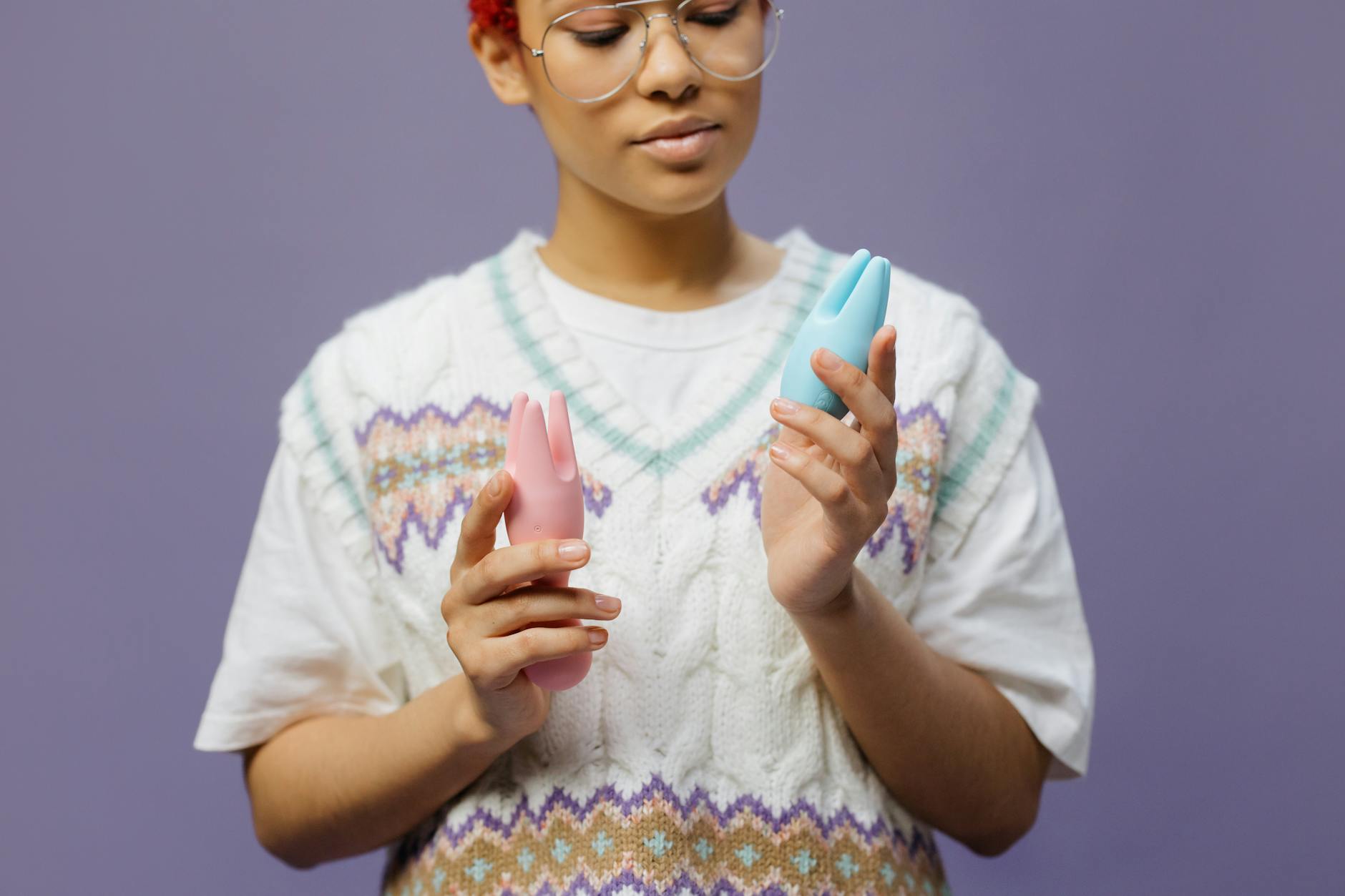
Perimenopause isn't menopause, but your body doesn't know that yet
Honestly, perimenopause gets the short end of the stick in the conversation about pleasure and aging. Everyone talks about menopause. Nobody talks about the decade (yes, sometimes a literal decade) where your hormones are actively shifting but you're not officially there yet. And here's what's wild: your pleasure changes during perimenopause in ways that are completely predictable, totally manageable, and actually pretty interesting if you're willing to pay attention.
The shift isn't dramatic overnight. It's gradual. Some days you feel exactly like yourself. Other days, stimulation that worked three months ago feels muted or uncomfortable. That's not a sign something's wrong. It's a sign that estrogen and progesterone are doing their thing, and your tissues are responding.
Most people discover this in the shower, or alone with whatever toy they've been using for years, suddenly thinking, "Wait. Did this always feel like this?" The answer is no. Your body changed. And that's where lemon clitoral vibrators like the Lem become genuinely useful.
What perimenopause actually does to sensation
Here's the physiological reality. Estrogen doesn't just disappear in perimenopause. It fluctuates wildly. One week you've got enough to fill a pool. The next week, not so much. This cycling (which can happen monthly at first, then more erratically) directly affects:
Clitoral tissue thickness. The clitoris has thousands of nerve endings, and estrogen helps maintain the tissue surrounding them. When estrogen dips, that tissue thins slightly. It doesn't break. It doesn't stop working. But the nerve endings sit a tiny bit closer to the surface, which changes what feels good.
Lubrication speed. You might notice arousal takes longer to build. That's not low libido. That's your body needing more time to produce the lubrication that signals readiness. Blood flow to the vulva is also slightly slower, which means engorgement (the swelling that intensifies sensation) happens more gradually.
Orgasm intensity and shape. Some people report orgasms feel shallower during perimenopause. Others say they're more concentrated or intense. Both are real. The pelvic floor loses some estrogen-dependent elasticity, which changes how contractions feel.
The critical thing: none of this means you've lost the ability to feel pleasure. You're just feeling it differently, and different isn't broken.
Why lemon vibrators work differently during hormonal shifts
Traditional vibrators work by pure vibration frequency. They buzz. That's their job. For someone in perimenopause whose tissue is thinning and arousal is slower to build, pure vibration can feel like too much mechanical pressure too fast. It's like pressing directly on already-sensitive skin.
Lemon suction vibrators (and specifically the Lem) work through a completely different mechanism. Instead of vibration, they create gentle suction and release patterns that simulate the sensation of oral sex. Here's why that matters during perimenopause.
First, suction doesn't require the same kind of direct friction. That means you can start gentler without numbing out. Second, suction-based stimulation engages the clitoris differently. It pulls blood to the area gradually, which actually helps overcome the slower-arousal problem perimenopause brings. Third, the sensation is rhythmic and building in a way that mirrors natural arousal, so your body catches up faster.
In clinical conversations I've had with people navigating perimenopause, the shift from traditional vibration to a suction toy like the Lem often happens naturally, without much prompting. "It just felt better" is the most common response. Better, because it matched what their body needed in that moment.
The perimenopause timeline and what to expect
Most people enter perimenopause in their 40s, though it can start as early as 35. This phase lasts, on average, 8-10 years. During that time, your cycle might stay regular for a while, then get weird. You might have hot flashes, or you might not. You might have one month where pleasure feels exactly the same as always, followed by three months where nothing quite lands right.
The useful thing is recognizing the pattern. I recommend tracking when sensation feels different alongside your cycle (if you still have one). You'll probably notice that during the second half of your cycle, when progesterone is higher and estrogen is dropping, pleasure might feel muted. Then your period comes, and for a few days at the start of a new cycle, sensation might snap back to normal. That's not random. That's your hormones talking.
Once you see the pattern, you can stop treating the muted-sensation weeks as personal failure and start treating them as information. Maybe during those weeks, you use the Lem at a higher setting. Maybe you give yourself more warm-up time. Maybe you skip penetration and focus on external stimulation. There's no "right" way to feel good.
How to adjust your approach to pleasure during perimenopause
Three concrete changes that help almost everyone:
Lengthen your warm-up. If you used to feel ready in 5 minutes, budget 15-20 during the tougher hormone weeks. This isn't a sign of dysfunction. Slower arousal during perimenopause is normal. Rushing through it creates frustration. Leaning into the longer timeline actually deepens arousal.
Start at a lower intensity setting. If you're used to running the Lem on pattern 4 or 5, try starting on pattern 1 or 2 during perimenopause. You can build up. The point is meeting your body where it is, not where it used to be. A lemon clitoral vibrator's range is wide precisely because sensation changes. Use it.
Experiment with pressure and angle. During perimenopause, direct pressure on the clitoris might feel too intense. Try angling the toy so it's stimulating the clitoral hood or the sides of the clitoris instead of the tip. Suction toys give you that flexibility because they're not a rigid vibrating shape.
The partner conversation during perimenopause
If you're partnered, here's what I tell couples navigating this: separate the two things. Your body is changing is one conversation. We need to reconnect is a different conversation. The worst thing you can do is conflate them, which turns both into blame.
Your partner doesn't need to understand the exact mechanism of perimenopause to understand this: "I'm arousing slower right now, and I need a little more time to build up. That's not about you. It's what my body needs." That's it. That's the conversation.
If you want to bring a lemon vibrator into partnered sex, you could frame it as "I want to use this to warm up faster so we can spend more time together" rather than "traditional sex isn't working anymore." One opens a door. The other closes one.
When to check in with a doctor
If arousal slows down, fine. If pleasure changes, fine. If pain appears, that's the moment to call a doctor. Genitourinary syndrome of menopause (GSM) can start during perimenopause, not just after full menopause. If you notice pain, burning, or extreme dryness that doesn't improve with added lubrication and warm-up time, get checked. Topical estrogen cream can help, and it works quickly.
Also reach out if you're experiencing heavy bleeding or cycles that are wildly unpredictable (skipping three months, then coming back). That's medical information your doctor should have.
The pleasure actually gets deeper during perimenopause
Here's what I've noticed in my practice: people who pay attention to their changing pleasure during perimenopause, instead of resisting it, often come out the other side with a richer sense of what they actually like. You can't ignore what your body needs and learn anything from it. But when you listen? You find out things.
Lemon sexual toys like the Lem aren't a workaround for a broken thing. They're a tool that matches what perimenopause actually demands. That's the difference. Your pleasure isn't ending. It's evolving. The devices and conversations that evolve with it make the journey feel like something worth paying attention to, not something to tolerate.
FAQ: Perimenopause and Pleasure
Can you still have strong orgasms during perimenopause?
Absolutely. Some people's orgasms actually feel more intense during perimenopause because arousal builds more slowly, which creates more tension before release. Others find they're slightly less intense but more focused. The key is that orgasms don't disappear. The shape changes. Many people find that suction-based lemon clitoral vibrators help them reach orgasm more consistently during perimenopause because the slower build matches what their body needs.
Does using a lemon vibrator during perimenopause mean my pleasure is broken?
No. It means you're using the right tool for what your body needs right now. Your pleasure isn't broken any more than you're broken when you start wearing reading glasses. Both are adjustments to changing biology. Lemon vibrators and other lemon adult toys work better for some people during perimenopause because they don't require the same kind of direct friction that traditional vibrators do. That's not a downgrade. It's a pivot.
How long does it take for sensation to change during perimenopause?
It varies wildly. Some people notice shifts in sensation month to month, depending on where they are in their cycle. Others don't notice anything obvious for years. The most common pattern is gradually noticing that arousal takes longer and that certain types of stimulation feel less intense over the course of a year or two. If you're tracking it alongside your cycle, you'll probably spot the pattern faster than if you're just waiting for something obvious to happen.
Can lemon suction vibrators help with slower arousal during perimenopause?
Yes. Because suction creates a gentle pulling sensation that brings blood to the area gradually, it can actually speed up arousal compared to pure vibration. Many people find that switching from a traditional vibrator to a lemon suction toy like the Lem during perimenopause helps them reach arousal faster and feel stimulation more intensely. It's not magic. It's just a different mechanism that happens to work better for how your body is responding to hormonal shifts.
Is it normal for lube to become more important during perimenopause?
Completely normal. Lubrication is the first thing that changes when estrogen starts shifting. You might produce less of it naturally, and you might produce it more slowly. Adding external lube (water-based works best with silicone lemon clitoral vibrators) is just meeting your body where it is. Don't treat it like a sign that something's wrong. Treat it like the useful tool it is.
Should I stop using the Lem or other lemon vibrators if sensation feels numb?
Not necessarily. Numbness during perimenopause is usually temporary and cyclical, tied to where you are in your hormonal cycle. Instead of stopping, try adjusting: use a higher setting on the Lem, spend more time warming up, or switch between patterns to keep sensation fresh. If numbness persists across multiple cycles and doesn't seem tied to hormonal timing, that's worth checking in with a doctor about. It could be a sign of something else going on.
You're not early to menopause. You're exactly on time for perimenopause.
Perimenopause isn't a waiting room before the real thing starts. It's the real thing. Your body is changing, your pleasure is adapting, and the conversations you have with yourself and your partner about what feels good right now matter way more than holding onto what used to work. Lemon vibrators, lemon sexual toys, and other tools designed for changing pleasure aren't concessions to aging. They're evidence that you're paying attention. That's the opposite of giving up.