Let's talk about painful sex without pretending it's rare
One in four women experiences painful sex regularly. That's not a small edge case. It's a significant portion of people with vulvas, and it changes everything about how you approach your own body and your relationships. Pain during sex isn't a sign you're broken. It's a signal that something in your physical setup, your emotional state, or your technique needs to shift.
Here's the thing nobody tells you: the solution often isn't to push through or accept it as permanent. It's to change the tool.
How friction becomes pain
Pain during sex usually traces back to three mechanics: friction, pressure, and texture. Traditional vibrators handle these in ways that work beautifully for some people and create problems for others.
A standard vibrator applies rapid, direct friction to sensitive tissue. For people with vulvovaginal atrophy, thin tissue, pelvic floor tension, or just a naturally sensitive clitoris, that friction can feel sharp or burning instead of pleasurable. The more you tense against the pain, the tighter your pelvic floor becomes, which makes the next time worse.
Lemon clitoral vibrators work differently. They use suction and gentle pulse patterns instead of grinding friction. That distinction is massive for pain management because suction stimulates the clitoris without the same mechanical pressure. You get deep nerve activation without the tissue irritation.

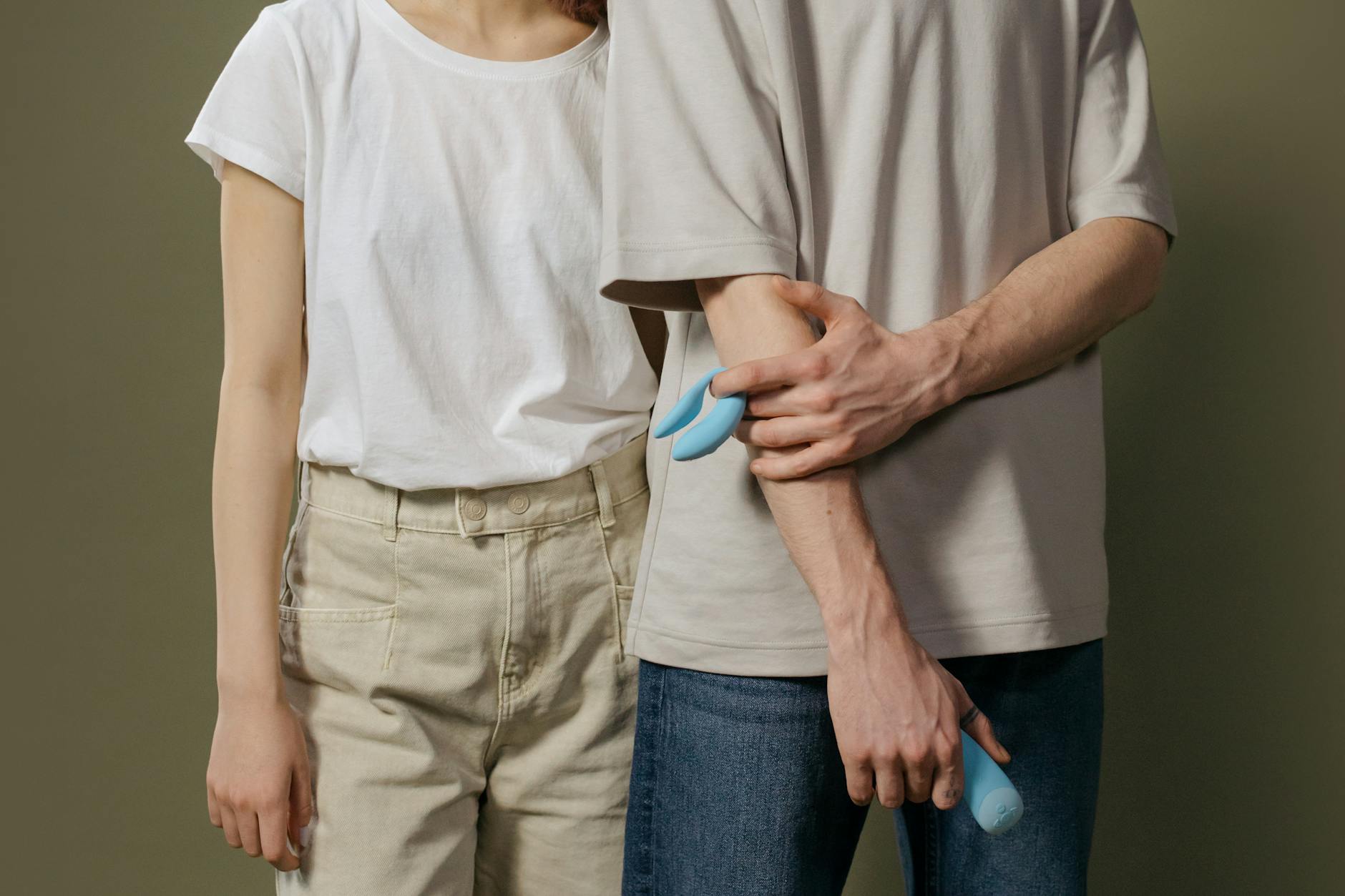
Photo by IFONNX Toys on Pexels
Why suction beats friction for sensitive tissue
When a lemon suction toy creates that seal around your clitoris, it's doing something your body recognizes as pleasurable without interpreting it as threatening. The stimulation is broad-based rather than point-loaded. Your nervous system doesn't brace for impact.
This matters particularly if you have vulvovaginal atrophy from menopause, hormonal birth control, or breastfeeding. Your tissue is thinner and more prone to micro-tears. Friction designed for thicker tissue feels like sandpaper. Suction feels like a warm, rhythmic embrace.
I've worked with dozens of clients who assumed they'd lost their capacity for pleasure after developing pain during sex. Once they shifted to a lemon clitoral vibrator or other suction toy, they realized the problem was never their body. It was the friction.
The pelvic floor pattern you need to break
Here's where the relationship piece comes in. When sex hurts, your body learns to tense defensively. Your pelvic floor muscles grip tighter before penetration even happens. This is protective and automatic. It's also the thing that makes pain worse next time.
Breaking this pattern requires two things: proof that pleasure can happen without pain, and tools that don't trigger the defensive response in the first place. Lemon sexual toys provide both. Because the sensation is gentler and the stimulation pattern is different from what caused pain before, your nervous system relaxes instead of bracing.
I recommend using a suction toy solo first, in a low-pressure context. No timeline, no performance expectations. Just your body learning that this tool doesn't hurt. Once you've rebuilt that trust with yourself, pleasure returns naturally.
When pain is psychological vs. physical
Sometimes painful sex starts physical but becomes psychological. The pain creates fear. Fear creates tension. Tension creates more pain. You're stuck in a cycle where your own anticipation is part of the problem.
Breaking that cycle often requires stepping outside the original context for a bit. Using a different toy, solo exploration, maybe even a different environment or time of day. The goal isn't to "work through it." It's to give your nervous system a clean experience without the fear baggage.
Lemon vibrators help because they're novel. Your brain doesn't have the "this will hurt" association that it might have with whatever you've been trying before. You're starting fresh.
The practical adjustment guide
If you're moving toward pleasure after experiencing pain, here's the roadmap I use with clients.
Start with solo exploration, no deadline. Use your lemon clitoral vibrator in a comfortable space where you feel safe. Try the first few intensity settings. Notice what feels good and what creates any tension. This is data, not failure.
Work with your pelvic floor intentionally. Before using any toy, spend two minutes breathing into your pelvic floor and consciously releasing it. Imagine the muscles softening. This trains your body to relax into pleasure instead of tensing against it.
Introduce water-based lubricant even if you're not planning penetration. Lubrication reduces friction and signals to your nervous system that this is a safe, prepared context. It also gives your tissue more glide room.
Go slow with intensity. Lemon suction toys start gentle. Use that to your advantage. Patterns 1 and 2 are often more than enough. Slow intensity + longer duration beats fast intensity every time for nervous system regulation.
When you're ready to involve a partner, communicate the shift. Tell them you're rebuilding your relationship with your own pleasure and you need them to follow your lead, not initiate. This sounds simple and it transforms everything because it puts you in control.
What changes when you rebuild pleasure after pain
One of the surprising things I've observed is that people who've recovered from painful sex often report more satisfying pleasure afterward than they had before. This isn't mystical. It's because they've spent time reconnecting with what actually feels good instead of performing what they think should feel good.
You learn your body's real signals. You understand pacing. You know how to communicate what helps. Those are skills that carry into every physical interaction you have.
When to bring in professional support
If pain is severe, constant, or doesn't improve with a different toy and some time, see a pelvic floor physical therapist or a gynecologist trained in vulvovaginal pain. Conditions like vulvodynia, vaginismus, and endometriosis require specific approaches that a toy alone won't fix. Suction devices are helpful supports, not replacements for medical care.
Similarly, if the pain is tied to trauma or deep relationship stress, working with a therapist who specializes in sex and relationships can untangle the psychological pieces while you're working on the physical ones.
You don't have to choose between getting professional help and exploring new tools. The best path usually includes both.
FAQ
Can a lemon vibrator help with vaginismus?
Vaginismus is involuntary pelvic floor tension triggered by penetration or the anticipation of penetration. A lemon clitoral vibrator can help because it bypasses the vaginal opening entirely and targets external pleasure. Solo use builds confidence and teaches your pelvic floor that pleasure doesn't require pain. However, vaginismus usually benefits from pelvic floor physical therapy too. A vibrator is a helpful tool, not a complete solution.
Will using a lemon suction toy make penetration less pleasurable later?
No. In fact, the opposite often happens. When you're used to intense clitoral stimulation, some people worry that vaginal sensation will feel "less." But pleasure is context-dependent. The clitoris and vagina create different sensations. Learning to enjoy both means enjoying more kinds of pleasure, not less.
How long does it usually take to rebuild pleasure after painful sex?
There's no fixed timeline, but most people notice a shift within two to four weeks of regular solo exploration with a tool that doesn't trigger pain. Sometimes it's faster if the pain was recent and short-lived. If you've had painful sex for years, rebuilding takes longer because there's more psychological conditioning to unwind. Patience with yourself is part of the treatment.
Can I use a lemon vibrator if I have a latex allergy or sensitivity?
Most lemon clitoral vibrators from Hello Nancy are made from medical-grade silicone, which is latex-free and hypoallergenic. Always check the product specs, but silicone toys are the safest choice if you have sensitivities. They're also easier to clean and last longer than other materials.
Is lemon suction better than traditional vibration for all painful sex?
Suction works particularly well for friction-related pain and sensitivity. If your pain is related to depth, pressure during thrusting, or internal pressure, suction helps but might need to be combined with other strategies like different positioning or pacing. Pain is specific to your body. What works best is usually something you discover through gentle experimentation.
What if I'm embarrassed to tell my partner I want to use a lemon vibrator?
Start by reframing it in your own mind first. You're not asking permission. You're solving a problem with your own pleasure. Once you're clear on that, the conversation with your partner becomes simpler. You might say something like, "I've realized that a different kind of stimulation helps me feel better and enjoy sex more. I'd like to try this." Most partners are relieved that there's a solution. Pain during sex affects them too because they don't want you to hurt.
What actually shifts
When you move from painful sex to pleasurable sex, you're not just changing a physical sensation. You're rebuilding trust in your own body. You're learning that your pleasure matters and that it's worth troubleshooting for. You're discovering what actually feels good instead of what you think should feel good.
Lemon clitoral vibrators are tools for that process. They reduce friction, they sidestep the pelvic floor tension pattern, and they give your nervous system a clean experience to build on. Your pleasure deserves that kind of support.
If you're ready to explore what works for your body, start solo, go slow, and pay attention to what feels right. Your body knows the answer. You're just giving it the right questions.