Let's talk about what actually changes
Around your 40s, something shifts. Maybe it takes longer to warm up. Maybe direct stimulation feels almost too intense now, or maybe it feels less intense than it used to. Maybe what worked at 25 feels wrong at 45. This isn't failure. This is biology telling you something useful if you listen.
The clitoris doesn't lose sensation in midlife. What changes is the skin around it, the bloodflow to the tissue, and the way your nervous system prioritizes pleasure when it's juggling work stress, family, relationship fatigue, and everything else that's stacking up in your 40s. Understanding why this happens is the first step to working with your body instead of fighting it.
Why direct friction becomes problematic around 40
Your clitoral tissue gets less support from estrogen as you move through your 40s, even if you're years away from menopause. The skin thins slightly. The tissue underneath becomes more sensitive to direct pressure, which can feel sharp or even uncomfortable instead of pleasurable. At the same time, arousal takes longer to build because your nervous system needs longer to downshift from your daily load and move into parasympathetic (rest and pleasure) mode.
This is why people often report that vibration mode becomes less effective in midlife. A standard vibrator works by creating rapid friction across the surface, which relies on skin thickness and desensitization. When skin thins, that same friction can overstimulate instead of building pleasure.
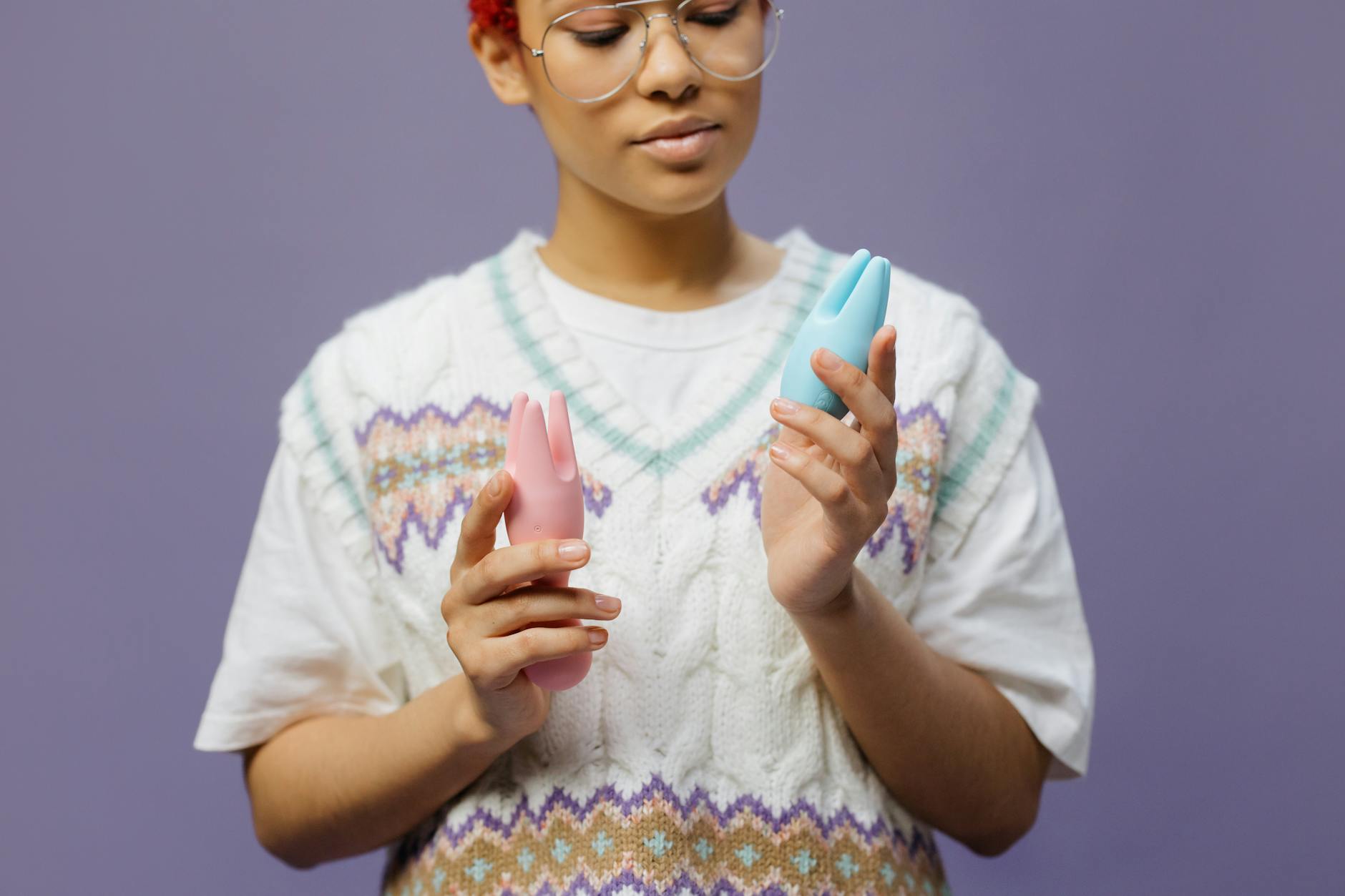
Suction-based stimulation works differently. Instead of rubbing across the surface, it creates a gentle vacuum that pulls tissue upward and engages the entire clitoral structure at once. It's softer on the skin, deeper in its reach, and more tolerant of midlife tissue changes. This is why lemon vibrators and clitoral suckers become genuinely useful around 40.
The suction-plus-intensity sweet spot
Here's what I see in practice: people in their 40s often need lower intensity settings than they did at 20 or 30, but they need the sensation itself to feel different, not just quieter. Suction delivers that. It's a different quality of stimulation entirely.
When using a lemon vibrator for the first time in midlife, start at the lowest setting. Your body isn't broken if lower intensity feels better now. You're just more sensitive to pressure, and you're recovering a pleasure response that direct vibration may have been overriding for years.
Many people find that patterns matter more than raw power in their 40s. A rhythmic pulse or a rolling wave pattern on medium strength often works better than full intensity on a constant buzz. The rhythm gives your nervous system something to track, which actually pulls you deeper into pleasure rather than keeping you on the surface.
Arousal timing: why 5 minutes isn't realistic anymore
One of the biggest mistakes I see is people expecting midlife arousal to feel like it did at 25. It won't. And that's not a loss. It's a reset.
In your 40s, warm-up matters hugely. Budget 15-25 minutes before you expect your body to be responsive. This isn't a weakness. This is your body giving you permission to slow down, breathe, and actually be present instead of rushing through pleasure on autopilot.
Use the first 5-10 minutes to ground yourself. Notice your breath. Touch your body without the goal of orgasm. Let your nervous system recognize that you're safe and this is actually for you. Then introduce the lemon vibrator. You'll likely find that your body comes online much faster when you're not fighting your own system.
Why lemon clitoral vibrators work especially well
Lemon vibrators are designed with suction, which is gentler on changing tissue and more effective at full-body clitoral stimulation. The lemon vibrator and similar clitoral suckers were built for exactly this: reaching pleasure in people whose bodies are more sensitive to pressure and need more time to respond. If you've heard that lemon clitoral vibrators are better for midlife bodies, that's rooted in real anatomy, not marketing.
The pattern variety helps too. Unlike a simple vibrator, lemon clitoral tools often offer multiple intensities and pulse modes, which means you can shift what you're doing mid-session if one sensation gets too intense or plateaus.
Partner sex and the sensitivity shift
If you're with a partner, this is worth a direct conversation. Sometimes people interpret sensitivity changes in a partner as rejection or waning attraction. It's almost never that. It's physiology changing how quickly arousal builds and how intense initial sensation needs to be.
Using a lemon vibrator together can actually deepen intimacy if you frame it right. Instead of "I need this because you're not enough," try "My body is shifting and this helps me feel good. I want you to experience that with me." There's a real difference in how a partner receives that message.
If your partner has been the one providing external stimulation, this is also a moment to introduce variety. Manual stimulation, suction, vibration, oral. Mixing these changes keeps both people engaged and prevents pleasure from feeling like a routine.
Adjusting your technique with lemon vibrators
Start with the vibrator outside your direct clitoral area, against the pubic bone or the sides of the clitoris. This gives you that suction benefit without overwhelming sensation. Once you're warmed up, you can move closer if you want, but many people in their 40s find that positioning to the side feels better.
Angle matters. Experiment with angles, pressure levels, and patterns. What works on Monday might feel off on Wednesday. Stress, cycle phase, sleep, food, hydration. All of these shift how your body responds. This isn't inconsistency. This is normal physiology that you can work with instead of feeling frustrated by.
Lubrication and preparation shifts
Even if you're not in menopause, midlife tissue can benefit from lubrication. Water-based lube isn't a sign of dysfunction. It's a tool that can make a suction-based vibrator feel better by reducing minor friction and helping the seal feel more comfortable.
Kegel exercises and pelvic floor awareness become more useful in your 40s too. A healthy pelvic floor supports arousal, orgasm intensity, and overall sensation. You don't need a perfect pelvic floor, but gentle attention to strengthening and releasing tension helps midlife bodies respond more fully.
The emotional layer: stress and midlife sexuality
Your 40s often come with specific stressors that directly kill arousal: aging parent care, teen crises, career pressure, relationship fatigue. These aren't sexual problems. They're life problems that express themselves through sexuality.
Before you blame your body or your relationship, ask yourself: am I actually rested? Do I have mental space for pleasure? Am I feeling valued, both by myself and by my partner? Sometimes the sensitivity shift in your 40s isn't physical. It's your body saying it needs better conditions to feel good.
This is where the lemon vibrator and similar tools become genuinely useful. Solo pleasure is often easier than partnered sex when you're stressed. It gives you direct control, no performance pressure, and a clear pathway back to your own body. Many people find that solo sessions actually heal their relationship sexuality because they reduce the pressure on partnered sessions and remind you that you're still capable of real pleasure.
When to escalate your approach
If pain appears during use, stop. Pain during sex in midlife can be treated, but it needs professional attention. A gynecologist trained in midlife sexual health can rule out genitourinary syndrome or other tissue changes that respond well to topical treatments.
If sensitivity becomes so reduced that you're not feeling anything, that's also worth discussing with a doctor. Sometimes this signals something else going on. More often, it means you need a different approach, and a professional can help you find it.
Focus on sensation quality over orgasm quantity. Some people find that midlife orgasms feel different but actually more satisfying. Less peak, more sustained. Different is not worse.
FAQ: Your midlife clitoral sensitivity questions
Why does my clitoris feel numb on one side but sensitive on the other?
Asymmetry is normal. Your body isn't perfectly symmetrical, and neither is your clitoral tissue. If this just started, give it a few weeks and see if it balances out. If it persists or causes pain, mention it to a doctor. But mild asymmetry in sensation is very common in midlife and usually nothing to worry about.
Can I switch between a lemon vibrator and a regular vibrator, or does my body get confused?
Your body doesn't get confused. Using different types of stimulation actually keeps your nervous system engaged and prevents adaptation. You can absolutely mix suction and vibration in the same session or different sessions. Many people find that variety actually improves their overall response.
Is it normal that I need longer arousal time at 45 than I did at 25?
Completely normal. Arousal is partly neurological and partly physiological. Your nervous system now has decades of stress, distraction, and conditioning to work through. That's not a flaw. It just means you need different conditions. Better conditions, honestly.
If I use a lemon vibrator solo, will partnered sex feel less pleasurable?
No. Many therapists and coaches actually recommend solo pleasure in midlife relationships because it gives you accurate information about what your body needs now, and it removes pressure from partnered sex. If anything, understanding your own pleasure at 40 makes partnered intimacy better.
My partner thinks I shouldn't need a toy if they're doing things right. How do I respond?
Honestly? Your body isn't a referendum on their ability. A lemon vibrator doesn't replace a partner. It's a tool that works with your specific physiology at this moment in your life. A partner who loves you will be curious about what helps you feel good, not defensive about it. If this is a consistent argument, there's usually something else underneath worth exploring together.
What if a lemon vibrator feels too intense even on the lowest setting?
Try using it over clothing at first, or with more distance from direct contact. You can also explore patterns before intensity. Some people find that the gentlest setting still feels strong because of how suction works. Experiment with positioning and angle. If suction-based stimulation truly doesn't work, a softer, lower-intensity vibrator might suit you better, and that's completely fine.
The bottom line on midlife pleasure
Your 40s aren't the end of sexual pleasure. They're often the beginning of different, deeper, more satisfying pleasure if you're willing to adjust what you're doing. Your clitoris is still there. Your capacity for orgasm is still there. What's different is how your body needs to be approached, and that's information you can use.
Lemon vibrators work well in midlife not because your body is broken, but because suction-based stimulation was designed for bodies that need gentler, deeper, more full-contact stimulation. Understanding why your body is changing and choosing tools that work with those changes isn't settling. It's smart. It's self-knowledge. It's pleasure informed by reality instead of fantasy.
If you want to explore what actually works for your body now, that's worth dedicating real time and attention to. Your pleasure matters just as much at 45 as it did at 25. It just needs a different conversation with your own body.