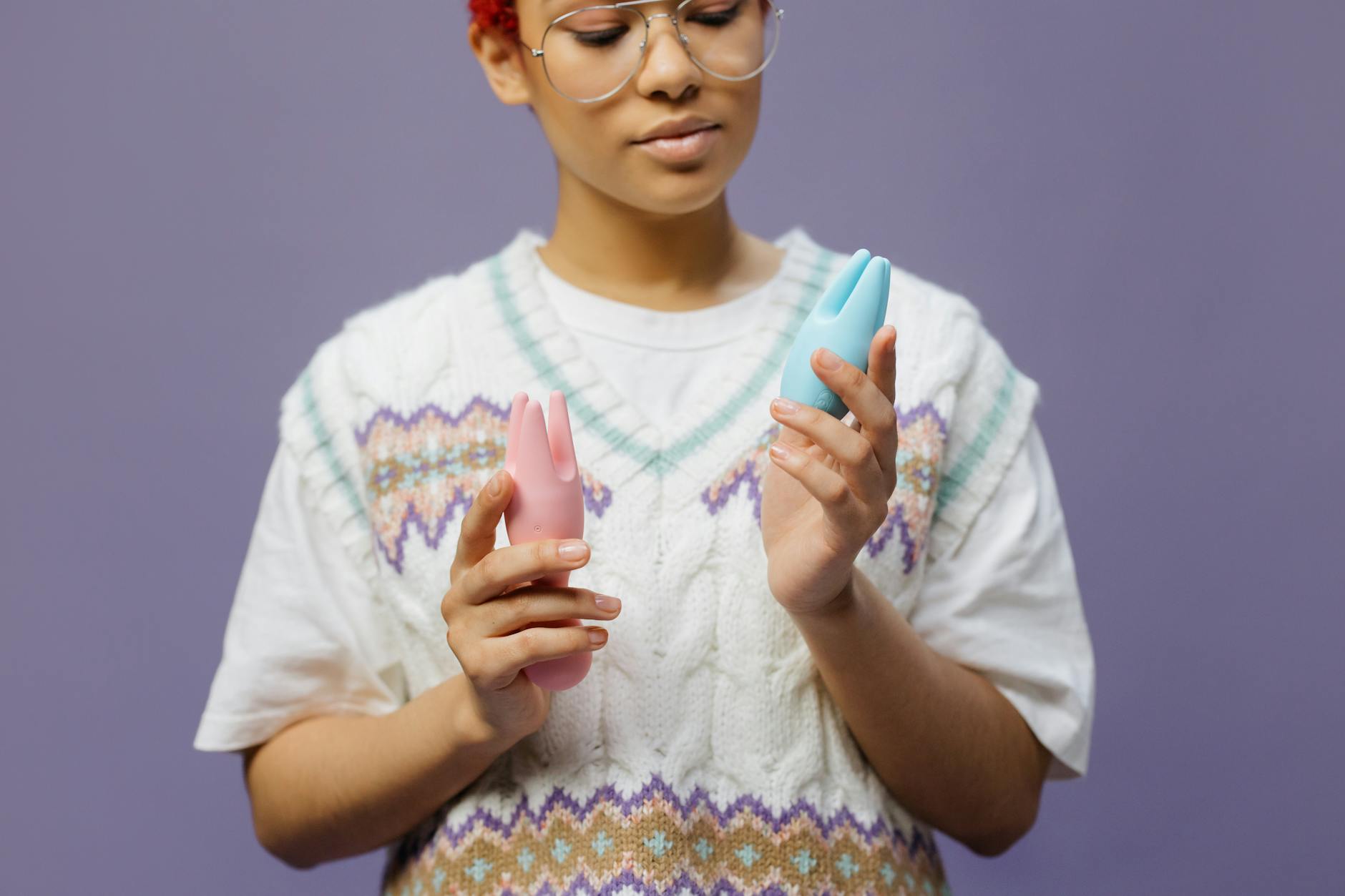
Here's what no one tells you about arousal after 40
Arousal doesn't disappear after 40. It just changes pace. The clitoral response that used to fire up in minutes now needs 15 to 25 minutes of consistent stimulation. That's not a loss. It's a shift. And once you stop fighting it and start working with it, lemon vibrators become exponentially more useful than they were when you were younger.
Most people assume slower arousal means less pleasurable arousal. That's backwards. It often means deeper, more sustained pleasure. You're just building it differently.
Why arousal actually slows after 40
This isn't about desire drying up. Three physiological things are happening at once.
First, blood flow to the clitoris takes longer to peak. The vascular response that used to be nearly automatic now requires more consistent stimulation to trigger. Second, the clitoral tissue itself becomes less plump over time as estrogen gradually shifts. Third, your nervous system's response to sensation actually gets more sophisticated, not less. You're registering pleasure differently. It's subtler and often more localized, which is why light, quick touch sometimes feels frustrating after 40. You need a different kind of pressure.
Lemon vibrators with air-suction technology work brilliantly here because they don't rely on the rapid vascular response your body used to have. Suction creates sensation through gentle pressure waves rather than friction. For slower-warming arousal, this means you can build stimulation steadily without the frustration of needing harder and harder touch.
The warm-up window: why 20 minutes matters
If you've been giving yourself 5 to 10 minutes and stopping when nothing's happening, you're stopping right before the actual response kicks in.
Think of arousal after 40 like an old car engine. It needs a longer idle time before it can accelerate smoothly. That's not a flaw. That's just the system now.
Most of my clients find that if they commit to 20 to 25 minutes of uninterrupted stimulation starting around sensitivity level 2 on a lemon clitoral vibrator, the response comes reliably. The clitoris engorges. Sensation sharpens. But it needs the full window. Cut it short and you miss the payoff.
The second crucial thing: don't assume you need to escalate intensity quickly. Many people in this phase jump from level 1 to level 5 because nothing's "working" yet. Then when sensation finally arrives, it hits too hard and you have to back off. Instead, stay on level 2 or 3 for 10 minutes. Let the tissue respond. Move to level 4 or 5 only after you actually feel that shift. Your body will tell you when it's ready.
Mental load is doing more work than you think
Slower arousal after 40 isn't just physical. Your brain is also in a different place.
If you're managing a household, worried about work, thinking about what's for dinner, or just generally running on mental fumes, your nervous system isn't signaling availability for pleasure. Arousal requires actual cognitive space. Younger bodies can sometimes power through distraction. Older brains rarely can.
This is where lemon vibrators actually become a tool for permission rather than just sensation. Using a dedicated toy creates a boundary. You're saying to your brain: for this 25 minutes, my pleasure is the priority. Phone goes away. The TV is off. Your partner, if you have one, understands this is your time.
People often find that the arousal response speeds up once they protect the mental space. It's not the body that was slow. It was the mind that didn't have permission to show up.
How to structure your session for slower-warming arousal
Here's the actual framework I recommend.
Minutes 1 to 5: Foreplay without the toy. Touch your thighs, your breasts, your neck. Not to get "ready" for the toy, but to signal to your nervous system that this is sex time. Your body is slower, but it's not stupid. It needs the preamble.
Minutes 5 to 15: Introduce the lemon vibrator at level 2. This is not the time to aim for orgasm. You're building baseline sensation. Let the toy do the work. Your job is to notice what you feel, adjust positioning slightly if needed, and stay present. If your mind wanders, that's normal. Gently bring it back.
Minutes 15 to 20: Move to level 3 or 4. By now the clitoris should be responding. You'll feel it getting a little fuller. The sensation sharpens. Stay here until you feel a clear shift in what your body wants next.
Minutes 20 onward: From here, let your body drive. Some people want to escalate intensity. Others want to slow down and savor. Some want to add a vibrator or other toy. There's no formula. The point is you've given yourself time to actually arrive.
When a partner is involved
If you're using lemon vibrators with a partner during this phase, the dynamic changes compared to younger years.
Your partner might feel like 20 minutes is long. It's not. It's normal. But their impatience becomes your distraction, and distraction kills arousal even faster. This is where explicit conversation beforehand matters. "I need about 20 minutes of focused touch and toy play to warm up. That's the new normal for me. Can you be present with that?"
Many partners are relieved by this conversation because it removes the guessing game. They know what they're aiming for. They can settle in. Some partners find that slowing down actually deepens their own arousal too.
You can also take turns. You use the lemon vibrator on yourself while they're near you, present but not expected to lead. Then they might use a toy or ask you to focus on them. Slower arousal often makes couples more intentional and less reactive, which usually improves sex for both people.
The role of lubrication in slower warm-ups
Something shifts after 40 around natural lubrication timing too.
Your body might not produce as much lubrication as it used to, and it might take longer to start. That's not a sign something's wrong. It's a signal to use lube. Water-based works best with lemon clitoral vibrators because silicone-based can degrade the toy over time.
But here's the thing: lubrication often increases after you start using the vibrator, about 10 to 12 minutes in. So don't assume you need tons at the start. Use a small amount, let the stimulation work, and add more if needed. Your body is still responsive. It just has its own timeline now.
Troubleshooting the slow warm-up
"Nothing's happening even after 20 minutes." Check three things: Are you on the right intensity level (start lower than you think)? Are you actually mentally present or just going through the motions? Is there physical tension in your pelvic floor? Tight pelvic floor muscles can block arousal sensation. Try taking three deep breaths and consciously relaxing the area around your vagina before you start.
"It feels good but I'm not getting there." That's not failure. That's actually quite common after 40. Pleasure without orgasm is still pleasure. Some sessions are about sensation and connection, not about the finish line. That said, if orgasm is important to you, extending past 25 minutes sometimes helps. Your body might need 30 or 35 minutes. That's okay.
"I get there with the vibrator but lose it when my partner touches me." Transition is hard. Stay on the lemon vibrator while they touch other parts of your body. Let the vibrator stay steady. Gradually they can reduce their other touch, or they can stay involved. Find what keeps you there instead of assuming you have to switch tools.
The pleasure compounds over time
Here's something that surprises people: as you get more comfortable with the slower timeline, arousal sometimes speeds up slightly.
Not back to age 25. But you might find that after a few weeks of respecting the warm-up window, your body starts responding a little faster. That's because your nervous system realizes this is a safe, predictable context. You're not fighting your physiology anymore. You're meeting it where it is.
Lemon vibrators specifically help here because the suction sensation is so precise. There's less guessing. Your body gets clearer feedback. Over time, that clarity makes the whole process feel more efficient, even if it still takes 20 minutes.
People also ask
Is it normal for arousal to slow down after 40?
Yes, completely. Slower arousal is one of the most common shifts in sexual response after 40, and it's driven by a combination of hormonal changes, shifts in blood flow to the genitals, and changes in tissue composition. It's not a sign of reduced desire or capacity. It's a physiological adjustment. The good news is that once you work with it instead of against it, most people find their pleasure deepens.
Will lemon vibrators help if arousal feels numb or disconnected?
Lemon clitoral vibrators are specifically designed to work with desensitized or slower-responding tissue. The air-suction technology doesn't rely on friction, so it builds sensation through gentle pressure instead. Many people who feel numb or distant from their own arousal find that the suction pattern from lemon vibrators wakes the clitoris up in a way that straight vibration doesn't. That said, numbness can also signal hormonal changes, medication side effects, or stress. If it persists even with consistent use, check in with a doctor or therapist.
How long should I use a vibrator each session if I'm warming up slowly?
Start with 20 to 25 minutes as a baseline. This gives your body time to move through the full arousal curve at its own pace. Some sessions might be 15 minutes and feel complete. Others might be 30 or 35. The timeline is less important than the consistency. Your body responds better when you're not clock-watching. Set a loose window and let your body lead once you're a few minutes in.
Can my partner help speed up arousal, or does it get slower with a partner involved?
A partner can absolutely help, but the help looks different than it used to. Instead of ramping up intensity quickly, your partner can offer sustained, consistent touch while you use a lemon vibrator. They can also take mental pressure off you by being clear that they're present for however long it takes. Many couples find that slowing down actually deepens intimacy because there's less performance pressure.
What if the slower arousal is psychological, not physical?
That's worth exploring with a therapist, especially a relationship specialist if you have a partner. Stress, grief, relationship friction, body image shifts, or just the mental load of midlife can absolutely slow or block arousal even if your body is physically capable. A lemon vibrator can help you reconnect with physical sensation, but it won't solve the psychological layer. Both often need attention. That said, sometimes giving yourself permission to focus on solo pleasure for 20 minutes without guilt or pressure helps the psychological piece too.
Is slower arousal permanent, or will it speed up again?
It typically stays slower, but it's not a straight downward line. Factors like stress, relationship quality, sleep, exercise, and hormonal changes can shift your arousal timeline week to week or month to month. Some seasons are faster, some slower. The key is dropping the expectation that it should work like it did at 30 and building skills that work with your current reality. That's where lemon vibrators are most valuable. They're tools designed for exactly this phase.
The shift is worth it
Slower arousal after 40 feels like a loss at first. In the context of pleasure and connection, it's often a gain. You're forced to be more intentional. You get to know your own body better. You stop treating sex like a sprint and start treating it like a ritual.
Lemon vibrators meet this moment because they're built for sustained, precise stimulation. They're not trying to mimic the quick-response orgasms of younger years. They're tools for the arousal you actually have now. Use them that way, and you'll find that 40 and beyond isn't the end of your sexual life. It's often the part where you finally know what you're doing.