
Let's be honest about what happens
After five years, ten years, twenty years together, desire doesn't vanish because you've stopped loving your partner. It flatlines because your nervous system got bored. You know exactly what's coming. Your partner knows what you want before you ask. The sex, if it's happening at all, runs on autopilot. And autopilot kills arousal faster than almost anything else.
Here's what I see in my practice: couples who've been together long enough to have established patterns often mistake the absence of novelty for the absence of desire. They're not the same thing. And the good news is that one of them is actually fixable, even when the relationship feels stuck.
Why long-term relationships tank desire (and it's not what you think)
The usual suspects get blamed. You're tired. You have kids. You work too much. And yes, all of that matters. But the real culprit is something different: your nervous system stopped treating sex as something surprising. Predictability is efficient. Your brain loves efficiency. But efficiency is the enemy of arousal.
Arousal depends on a certain amount of uncertainty. When everything feels mapped out, your nervous system literally doesn't activate the way it needs to. The neural pathways for excitement require novelty. Even small novelty. Even just your own novelty.
Here's where lemon vibrators shift the equation. They're not about adding a partner. They're about waking up your own sensation system to the kind of intensity and stimulation you haven't felt in years. Once your nervous system remembers what that feels like, the rest becomes possible.
Why solo pleasure first actually matters for couples
This is the part that sometimes surprises people. Before you try anything with your partner, you need to reconnect with what makes your body actually respond. Not out of selfishness. Out of necessity.
When desire has been dormant for years, your body has learned not to expect pleasure. Your pelvic floor is probably tight. Your arousal response is sluggish. You might not even know what turns you on anymore because you've stopped asking the question.
Lemon vibrators, especially air-suction clitoral vibrators, are incredibly effective at cutting through that fog because they work with your body's natural response system rather than against it. The sensation is intense enough to break the pattern, but it's also something you can control completely. That sense of agency matters.
How to actually start (the setup that works)
Set aside 20 to 30 minutes when you're alone. Not rushed. Not with your phone nearby. Not with your partner in the next room wondering where you are.
Start with a low setting on the lemon vibrator. If you're using a lem vibrator or similar clitoral suction toy, begin at pattern one or two. You're not trying to have an orgasm in the first session. You're trying to feel sensation again.
Pay attention to what texture, rhythm, or intensity actually makes your nervous system wake up. Does it respond better to consistent pressure or varied patterns. Does it want sustained focus or movement around the area. These are things you probably haven't thought about in years, if ever.
Lemon sexual toys like these work because they don't require the same kind of direct friction that can feel overwhelming or numb if you've lost sensitivity. The suction stimulates nerves differently. It wakes things up.
The three-week pattern that changes things
I recommend my clients do this consistently for three weeks minimum. Not because there's magic in the number three, but because your nervous system needs time to relearn that pleasure is available. Once a week won't create the rewiring you need. Three to four times a week does.
Week one. Establish baseline. What patterns feel good. What intensity keeps your attention. What makes your body actually relax instead of tense up.
Week two. Start paying attention to what else turns you on when you're using the lemon vibrator. Are you thinking about something specific. Are you looking at something. Are you reading. The context matters because it tells you what your brain needs to access arousal.
Week three. Introduce one small variable. Maybe it's a different room. Maybe it's a different time of day. Maybe it's pairing the vibrator with something else that feels sensual. A specific scent. A texture. Music. You're teaching your nervous system that novelty is coming.
Why this actually matters for your partner relationship
Once you've reconnected to your own arousal, your dynamic with your partner shifts. You come to sex as someone who wants it, not someone who's cooperating with the idea. That's radically different.
I've worked with dozens of couples where one partner's reengagement with their own pleasure became the turning point for the whole relationship. Not because the partner felt less pressure. Though they did. But because desire is contagious. When one person's nervous system wakes up, it creates permission for the other person's to as well.
You can also actually tell your partner what you've learned. That's huge. "I realized I respond better to this kind of stimulation." Or "I need more time to warm up than I thought." Or "I actually want this specific scenario to happen." That's information. That's something to work with.
The conversation to have with your partner
Don't make this about the relationship being broken. Make it about curiosity. "I've been using a lemon vibrator on my own and I've remembered some things about what my body actually likes. I want to explore this with you."
Your partner might want to know what you've been using. Show them. Lemon vibrators are just tools. They're not competition. But your partner needs to understand that this is about reconnection, not replacement.
Some couples integrate it into partnered sex. Some keep it separate. The actual integration matters less than the fact that you've broken the pattern of predictability. You've introduced something that makes the experience feel different.
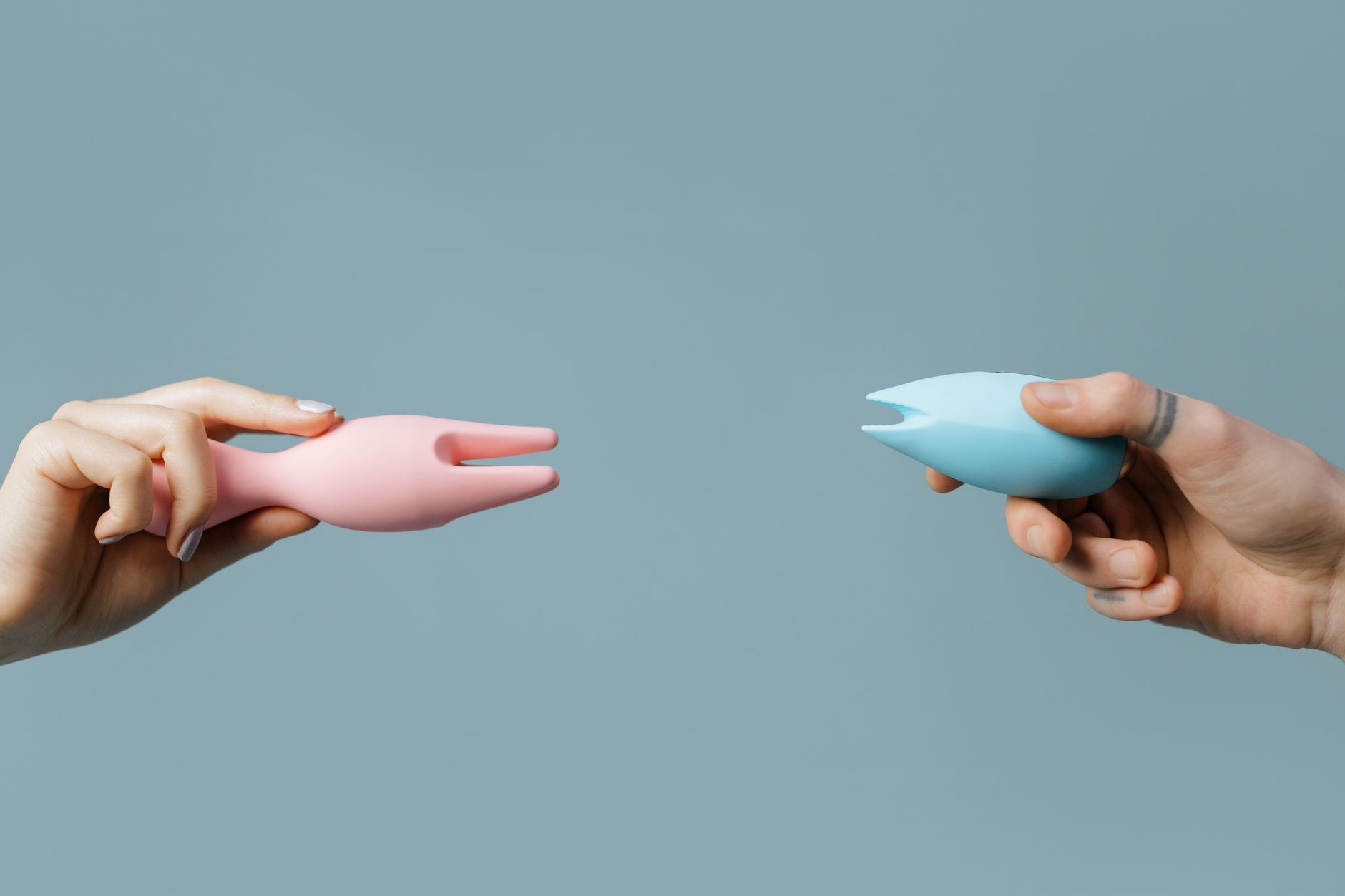
Photo by cottonbro studio on Pexels
When this approach doesn't work (and what that means)
If you're three weeks in and you're still feeling nothing, that's information. It doesn't mean lemon vibrators don't work for you. It usually means something else is in the way. Maybe you're resentful of your partner in a way that's deeper than just desire. Maybe there's an unresolved conflict that your nervous system won't let you past. Maybe there's grief or loss you haven't processed.
I sometimes recommend that couples who hit this wall work with a therapist before going further. Not because toys are a substitute for real work, but because sometimes the real work has to happen first.
The maintenance part (how to keep it going)
Once you've reconnected, don't abandon the practice. You don't have to do it as frequently as the first three weeks. But solo pleasure should stay part of your regular life, not just as maintenance, but as permission. Permission to want things. Permission to prioritize sensation. Permission to be someone who desires, not just someone who accommodates desire.
Long-term relationships that stay vital do one thing consistently. They keep introducing novelty. That novelty can be small. It can be as simple as continuing to use lemon vibrators on your own so that your nervous system stays awake. It can be as big as renegotiating the entire relationship. But something has to change from the pattern, or the pattern keeps running you.
People also ask
Will using a lemon vibrator solo damage my relationship or make my partner feel inadequate?
Not if you frame it right. You're not replacing your partner. You're reconnecting to yourself. That actually benefits the relationship because it gives you capacity for desire that you might not have had. If your partner responds with insecurity, that's a conversation worth having. But the isolation of feeling like you need to choose between solo pleasure and partnership is a false choice. You need both.
How long before I feel a real shift in desire for my partner?
Most people notice a difference in how their body feels within a week or two of consistent use. But the shift in desire for your partner often takes longer because it requires you to actually try sex again with that new nervous system activation. Give yourself at least four to five weeks before you decide whether this is actually working. Your body changes faster than your relationship dynamics do.
Can I use a lemon vibrator with my partner if they're uncomfortable with toys?
You can have that conversation. Some partners come around once they understand it's not about them. Some don't. If your partner is fundamentally opposed and you're fundamentally interested in exploring this, that's a bigger relationship question than the toy itself. But starting the solo practice first sometimes makes the conversation easier because you can speak from your own curiosity rather than from a place of deficit.
What if I don't have privacy to use a lemon vibrator at home?
Privacy matters for this to work effectively. If you genuinely don't have it, you might need to be creative. Early mornings. During lunch breaks. A locked bathroom. Even 15 minutes of uninterrupted time is enough to make progress. If you can't find any private time at all, that's probably worth examining as its own issue.
Is using a lemon clitoral vibrator the same as cheating if I'm in a relationship?
No. Full stop. Your own body and your own pleasure are not betrayal. If your partner believes they are, that's a values conversation worth having. But most long-term couples who stay vital understand that solo pleasure and partnered pleasure exist in different lanes. One doesn't prevent the other.
How do I know if my relationship is just stale versus actually broken?
Stale means the patterns have gotten predictable but the foundation is still there. You still like your partner. You still want things to work. You just need to remember what wanting feels like. If you're actively resentful or repelled, or if you're genuinely indifferent to your partner's pleasure or presence, that's different. That might need more than a lemon vibrator can offer. But most long-term relationships that feel dead are just asleep. And lemon vibrators are a really good way to wake yourself up.