The thing nobody warns you about
You will be touched out. Your partner will touch you and you will flinch. Not from anger. From exhaustion. After eight hours of small hands on your body, diaper changes, and someone else needing something from you, the last thing your nervous system wants is another person's skin.
This is normal. And it is quietly devastating to a relationship.
Why parenthood kills desire so efficiently
It's not that you stop loving your partner. It's that your brain stops registering them as available for anything but logistics. You become a team managing a small human, not a couple. Sex becomes another task on an impossible list.
Three things happen simultaneously:
Physical depletion. Sleep deprivation rewires your dopamine response. Your body literally cannot generate desire the same way it did before kids. This is biochemistry, not rejection.
Touch saturation. If you're nursing or doing most of the physical caregiving, you're being touched constantly. Your nervous system goes into protection mode. More touch feels like another demand.
Identity erosion. You're mom or dad now. Not a person with a body. Not a sexual being. That's a profound shift that nobody processes quickly.
Add in the fact that you probably have 40 minutes alone per week, and desire becomes theoretical.
Why this matters for your relationship (beyond sex)
Let's be clear: this isn't about fixing your sex life for his benefit. This is about reclaiming your body as yours.
When you spend years operating entirely for someone else's needs, you start forgetting that pleasure is your birthright. Sex becomes something that happens to you, not something you choose. Over time, resentment builds quietly. You feel invisible. Your partner feels rejected. Both are true and both are fixable.
The couples I work with who survive early parenthood with their marriage intact have one thing in common: they refuse to let sex disappear entirely. Not because they're having passionate encounters (they're not). But because they maintain even one small ritual of pleasure and self-direction.
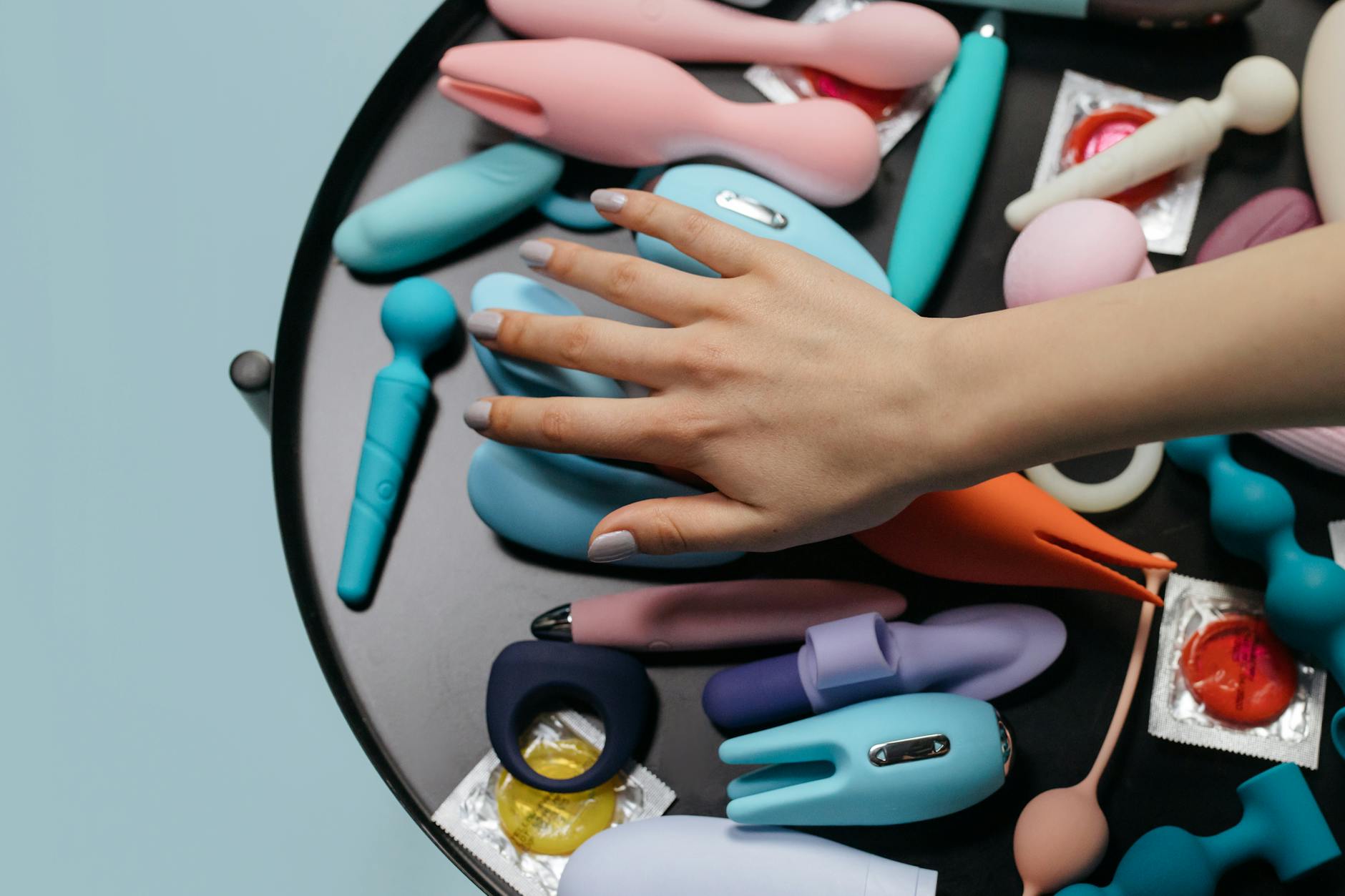
That's where lemon vibrators come in. They're fast, they're solo, and they're yours.
How self-pleasure actually strengthens your relationship
Here's the counterintuitive part: your partner benefits when you touch yourself.
When you reclaim your sexuality solo, you remember that your body is not just a functioning vehicle for parenting. You reconnect with your own nervous system. Your baseline stress drops. You sleep slightly better. You're fractionally less touched out.
Then, when your partner initiates, you're not starting from empty. You're starting from a place where desire exists at all. That's huge.
I recommend lemon vibrators specifically because they're efficient. A suction-style vibrator like the Lem bypasses the slow build. You don't need 30 minutes or a long warm-up. You can use it for 5-10 minutes while your partner watches the baby on a Saturday morning. Quick orgasm. Nervous system reset. Back to your day.
That efficiency matters when your time is fragmented.
The practical setup (because fantasy is for people with free time)
You need three things: privacy, a reasonable window, and zero guilt.
Privacy. Even 10 minutes alone matters. A locked door. Headphones playing something. Your phone on silent. This is non-negotiable.
Timing. Sunday mornings, naptime, after kids are down. Pick a time you're not running on fumes. You don't need to be fresh, but you can't be at 4% battery.
A lemon vibrator. Something quiet, waterproof (shower is often easier), and fast. The Lem works brilliantly for this because suction creates broad stimulation without requiring intensity or precision.
That's it. No candles, no rose petals, no fantasy. Real parents need real logistics.
What happens when you actually do this
Week one: You feel weird about it. Maybe a little selfish. That passes.
Week three: You notice you're slightly less irritated when your partner touches your shoulder.
Month two: You initiate something. Your partner is shocked and delighted.
Month four: Sex isn't back to normal, but it exists. It's not a source of guilt or conflict anymore.
This isn't magical. But it breaks the cycle. When pleasure exists somewhere in your life (even solo), it becomes possible again as a couple.
Bringing your partner in (or not)
Some people ask: shouldn't we do this together?
Maybe eventually. Right now, your job is to remember that pleasure is accessible to you. That takes priority.
If your partner wants to be involved, that can happen later. You using a lemon vibrator solo is not a rejection of them. It's the opposite. It's you refusing to let parenthood completely erase your sexual self.
If your partner does want to participate, start small. They watch while you use it. They help create the time and space. They're not performing anything. They're just witnessing you reclaim your body.
That's often hotter than synchronized choreography anyway.
The hardest part (and it's not what you think)
It's not finding time. It's accepting that this is enough.
Your brain has been trained to believe that pleasure needs to be elaborate, shared, and justified. Solo time with a vibrator feels selfish or incomplete. It's neither.
For the next five years, this might be your primary sexual outlet. That's not a failure. That's survival. That's protecting the part of you that is not a parent.
Your pleasure matters. Not for your partner's sake. For yours. Because you deserve to feel like yourself even when parenting is consuming everything.
When to involve a partner
If your relationship is strong outside the bedroom but sex has completely vanished, this solo work is your foundation. Do it for two months. Then talk. Not about adding more obligations, but about what you've noticed about your own body.
If your relationship has other fractures (communication breakdown, resentment, disconnection beyond sex), solo pleasure is necessary but not sufficient. Consider working with a couples therapist. A practitioner trained in the Gottman Method can help you rebuild the emotional foundation that sex sits on.
Pleasure alone cannot save a broken relationship. But reclaimed pleasure can prevent a disconnected one from eroding further.
The long view
Parenthood is a season, not forever. Your kids will eventually sleep through the night reliably. They'll stop needing you physically every 30 seconds. You'll get your body back.
But only if you don't let it disappear entirely.
Every time you use a lemon vibrator, even for five minutes, you're telling yourself: I exist. I feel. I matter beyond what I do for other people.
That's not selfish. That's survival. And survival is how couples make it to the other side.
People also ask
How often should I be using a lemon vibrator if I have young kids?
Once a week is genuinely enough. Your goal isn't orgasm volume. It's maintaining the neural pathway that says pleasure is still possible. One solo session per week keeps that door open. If you manage twice a week, fantastic. If it's once every two weeks because life is chaos, that still works. Consistency matters more than frequency.
Will my partner feel threatened if I use a vibrator?
Some partners feel insecure at first. That's often rooted in their own anxiety about being "enough," not about the toy itself. The conversation matters: "I'm using this to reconnect with my body. This isn't about you being insufficient. It's about me getting myself back." If your partner remains threatened after that conversation, that's a different issue worth exploring in couples work. A secure partner usually responds to clarity and honesty.
Can I use a lemon vibrator if I've never orgasmed easily?
Yes. In fact, post-parenthood sensitivity changes mean you might find pleasure more accessible now than before. Suction-style vibrators like the Lem work differently than traditional vibration. Some people who struggled with older toy styles find suction immediately helpful. Start low on the intensity setting and give yourself at least three sessions before deciding it's not working.
Is using a toy while your partner is home cheating?
No. Cheating involves deception and betrayal of trust. Using a toy solo is solo sex, which is something you have the right to. If you're hiding it because you're afraid of your partner's reaction, that's a trust problem worth addressing. But the toy itself is not infidelity.
How do I find time when there's literally no privacy?
You have to create it. That means asking your partner to take the kids for 30 minutes on Saturday morning. Or using a shower or bathroom lock. Or waiting until they're at school. I'm not being flippant. I know time is impossible. But solo pleasure is non-negotiable for your mental health. Treat it like a medical appointment. You wouldn't skip that. Don't skip this.
Will using lemon vibrators make me want less partnered sex?
The opposite usually happens. When you access pleasure regularly, your nervous system calms down. You're less touch-averse. You actually become more open to partnered sex because you're not starting from complete depletion. The couples I work with report more initiation after solo pleasure becomes routine, not less.
What actually happens next
You're going to feel weird about taking time for yourself. That feeling is cultural conditioning, not truth. Dismiss it.
You're going to worry that using a lemon vibrator means something about your relationship. It doesn't. It means you're protecting something fragile and important.
You're going to have better conversations with your partner because you're slightly less resentful. You're going to feel more like yourself. Your kids won't notice. But you will.
Pleasure doesn't solve parenthood. But reclaimed pleasure reminds you that you're still in there under the feeding schedules and tantrums. Hold onto that. It matters.