Let's start with what's actually happening
Arousal that takes 20, 30, sometimes 45 minutes to build feels broken. It isn't. What you're experiencing is the gap between what sex education taught you (desire flips a switch, arousal floods in, done) and what your actual body does (desire is one thing, arousal is another, and the path between them varies wildly).
Here's the disconnect: media shows arousal as linear and fast. Real arousal is nonlinear, contextual, and for many people, it's gotten slower, not faster, as they've aged or as their life has gotten more complicated.
Why arousal takes longer than you think it should
Several things happen in parallel, and any one of them can slow the whole process down.
Cognitive load. Your brain is running background processes. Work stress, relationship concerns, a text from your mum, the spreadsheet you didn't finish. Even if you're physically present, your brain is partially offline. Arousal requires attention. You can't divide your attention between genuine pleasure and mental tab-switching.
Hormonal rhythm. If you menstruate, your arousal response genuinely changes across your cycle. In the follicular phase, arousal can build quickly. Post-ovulation, it's slower. This isn't failure. It's biology.
Disconnection from sensation. Many of us spend our days in our heads. Work, logistics, email, screens. By the time you try to access pleasure, your body feels distant. You're not "out of touch" with sexuality. You're out of touch with touch itself. That takes time to rebuild.
Partner patterns. If your partner historically finishes quickly, you've learned to rush yourself. Paradoxically, trying to speed up arousal slows it down further because you're now focused on performance, not sensation.
Medication and illness. SSRIs, antihistamines, blood pressure medication. Chronic illness. Long COVID. These all affect arousal speed. Not permanently, usually, but definitely in the moment.
Why the traditional vibrator doesn't solve this
A standard vibrator applies vibration to already-aroused tissue, which works great once you're already turned on. But if arousal is slow, a vibrator can feel like you're applying pressure to tissue that's not yet responsive. It's like trying to start a car that needs a longer warm-up. You can rev the engine, but the engine isn't ready yet.
That's where the mechanism of a lemon clitoral vibrator becomes relevant. Instead of vibration alone, lemon sexual toys use suction combined with gentle pulsing. This does something different: suction actually draws blood to the area, initiating the physiological cascade of arousal itself. You're not waiting for arousal to happen so you can use the toy. The toy is helping arousal happen.
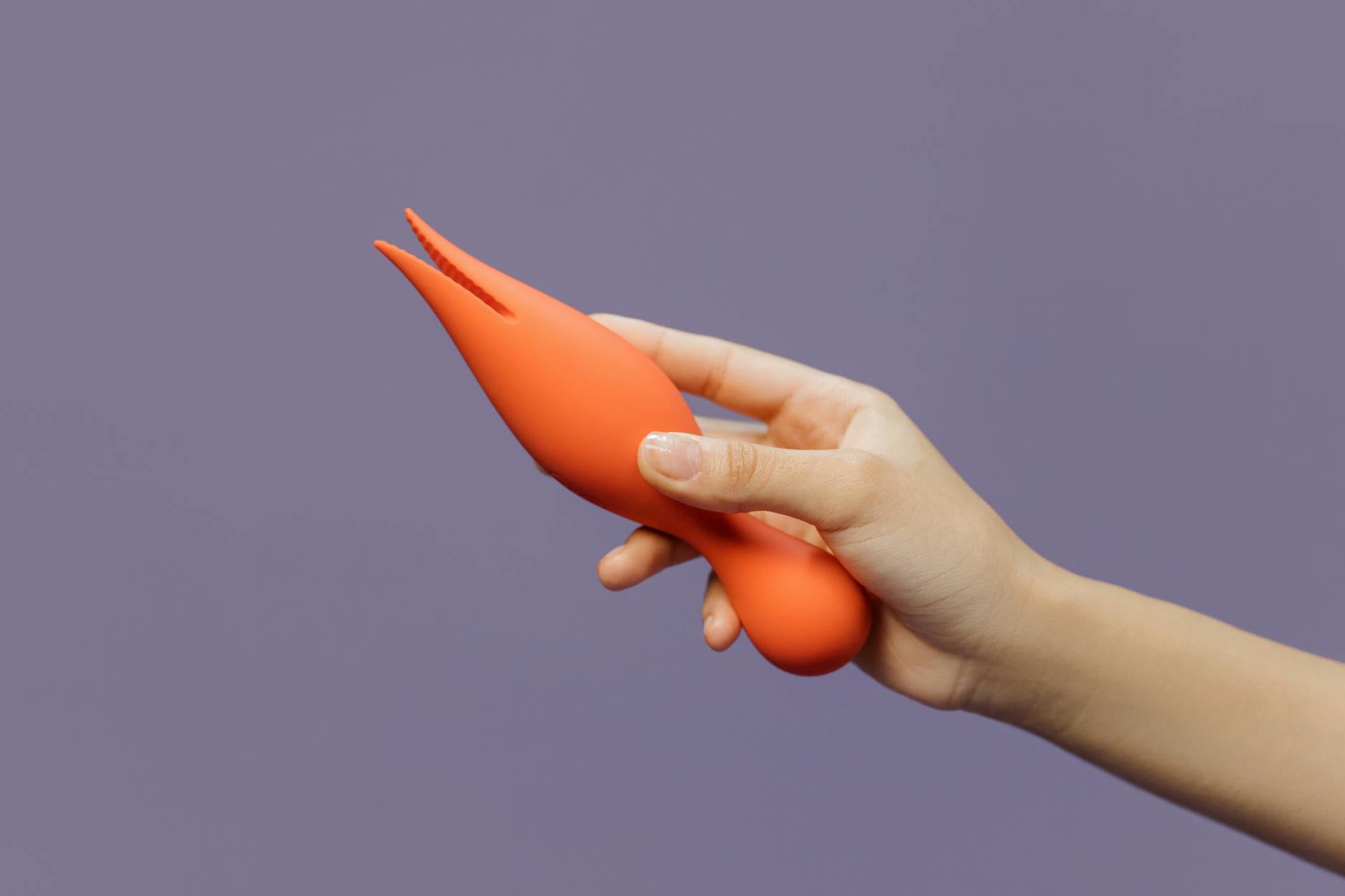
Photo by cottonbro studio on Pexels
How suction actually accelerates arousal
When you use a lemon vibrator, the suction mechanism creates a gentle pressure that pulls blood toward the clitoris. Blood flow is how arousal actually registers in your body. It's the physical foundation of everything else that follows. The gentle pulsing then maintains that blood flow and adds stimulation that registers as pleasure before you're fully aroused. This creates a positive feedback loop: suction initiates blood flow, stimulation registers as sensation, sensation signals to your brain that arousal is happening, your brain releases more neurotransmitters, more blood flows, more pleasure registers.
With a traditional vibrator, you're essentially waiting for this loop to start on its own, then adding vibration to it. With a lemon clitoral vibrator, you're jumpstarting the loop.
The speed difference is measurable. Most people using a lemon sucker find that arousal that previously took 30-40 minutes takes 12-18 minutes instead. It's not forcing anything. It's removing the waiting period.
The mental clarity part matters more than the mechanism
Here's what often surprises people: the fact that you're doing something intentional for your pleasure shifts your mental state. You've decided this is happening. You're not passively hoping arousal shows up. You've actively chosen a tool designed to help. That psychological shift alone quiets the background cognitive noise.
Most of my clients report that the first 5-10 minutes with a lemon vibrator feels genuinely meditative. You're not performing. You're not waiting. You're not checking in with your body anxiously ("Is it working yet?"). You're just... feeling. That mental permission is as important as the mechanism.
What changes once you bridge the slow arousal gap
Once arousal actually builds, everything else becomes more accessible. Sensitivity increases. Orgasm feels more likely, not like something you're chasing. If you're partnered, you're no longer in a rush or frustrated. You can actually relax into the experience.
Many people find that once they've experienced what full arousal actually feels like (instead of rushing through a partial version), they start recognizing it sooner in future sessions. Your nervous system learns the pattern. That feedback mechanism works both ways.
Practical adjustments for slow arousal
Beyond the lemon vibrator itself, a few things actually help:
Time it intentionally. Don't squeeze pleasure into 15 minutes between other things. Budget 30-45 minutes minimum and frame it as the activity, not something you're adding to your evening. This mental framing changes everything.
Reduce friction beforehand. Close the laptop. Put your phone in another room. Tell your partner you need uninterrupted time. Every small reduction in external stimulation helps your brain actually focus.
Start with exploration, not outcome. When you use a lemon clitoral vibrator, begin at the lower suction levels. You're not trying to reach an orgasm quickly. You're noticing: what pressure feels good, where on the body, what speed of pulsing creates sensation. This explorative mindset is antithetical to performance anxiety.
Warm up your nervous system. A few minutes of deep breathing before you start genuinely helps. Your vagus nerve responds to calm. Calm makes arousal easier.
Let's be clear: this isn't about trying harder or being more committed to pleasure. This is about working with your actual physiology instead of against it.
When slow arousal signals something else
If arousal is slow across all contexts, with all partners, and it's a recent change, it's worth checking other variables first. Stress, sleep, medication, relationship tension. A slow arousal that's consistent but has been your pattern forever is different from arousal that was normal and suddenly isn't. The latter warrants a conversation with a doctor.
But if slow arousal is just... how your body works, and you've been frustrated about it, lemon vibrators genuinely change the experience. Not through magic, but through mechanism. Suction-based stimulation accelerates the physiological cascade that arousal requires. That's the science. The pleasure part follows naturally.
Frequently asked questions
How long does it take for a lemon sucker to speed up arousal?
Most people notice a difference within the first 2-3 uses. Your body recognizes what the suction is signaling, and blood flow responds faster each time. By week two of regular use, arousal onset becomes noticeably quicker. The mechanism is consistent, but your nervous system learns to anticipate it.
Can slow arousal be completely normal, or is it always a sign of a problem?
Slow arousal is completely normal, especially if it's your baseline. What matters is whether it's causing you distress. If you're frustrated by a 40-minute ramp-up, a lemon vibrator helps. If you're fine with it, there's nothing to fix. The problem isn't the slowness. The problem is the frustration. One is physiology. The other is about your satisfaction.
Will using a lemon vibrator make partnered sex feel less appealing?
Actually, the opposite tends to happen. Once you experience what full arousal feels like, you're more likely to recognize it and want to pursue it with a partner. You're not replacing partnered sex. You're learning your own baseline so that partnered experiences feel more connected, not less.
What if I use a lemon clitoral vibrator but still don't feel much?
A few checkpoints: suction level (start low), positioning (angle matters), and context (stress and distraction are real factors). But if you're several uses in and still not feeling the difference, the issue might be disconnection from sensation more broadly, which is a different problem. A conversation with a sex therapist or a doctor about numbness is worth having. The lemon vibrator is a tool, not a cure.
Is there a "right" pattern for using a lemon sucker to speed arousal?
No single right way. Some people like to start with suction alone for a few minutes, then add pulsing. Others want both immediately. The lower suction levels are gentler. Work up to higher intensities if you want to. Your body will tell you what feels right. Many people find that patterns that worked with traditional vibrators don't translate directly to suction-based toys, so give yourself permission to experiment.
Can slow arousal improve with a lemon vibrator if I'm on medication that affects it?
Sometimes, yes. SSRIs and some other medications slow arousal but don't eliminate it. A lemon vibrator can bridge that gap by jumpstarting the physiological process. But if medication is the primary culprit, it's worth talking to your prescriber about timing or adjusting your dose. The vibrator helps. Medication adjustment might help more. Both conversations matter.
The bottom line
Slow arousal isn't a character flaw. It's not a failure of desire. It's usually just a function of how your nervous system works, what's happening in your life right now, and sometimes hormones or medication. Lemon clitoral vibrators help because they address the physiological foundation of arousal directly, rather than waiting for it to happen on its own.
You don't need to white-knuckle your way to pleasure. You don't need to feel broken because arousal takes time. You just need tools that work with your timeline, not against it. That's where lemon sexual toys and suction-based mechanisms become genuinely useful.
If slow arousal has been frustrating, it's worth exploring what's actually possible when you work with your body's real rhythms instead of fighting them. Your pleasure deserves that kind of attention.
Want to explore this further or have questions about what might work best for your body? Let's talk.