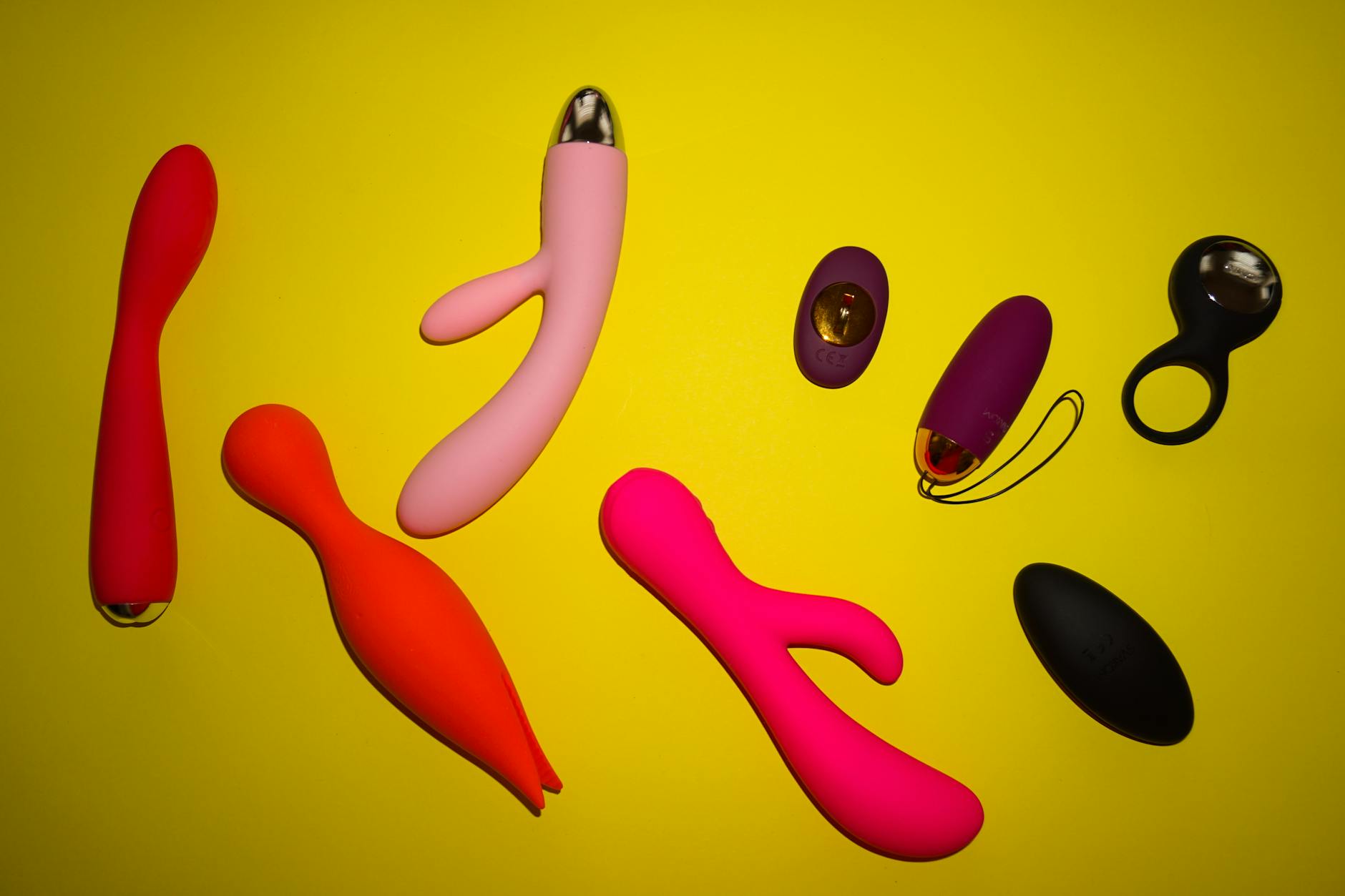
Let's talk about the distance that sneaks in
You know the one. It starts small. Someone stops reaching for the other's hand in the car. Conversations shrink to logistics. Sex, if it happens at all, feels like checking a box. You're still in the same bed, but you're sleeping on opposite coasts.
This distance is not about attraction. It's about what happens before attraction. It's about the safety to be vulnerable, the belief that your partner is genuinely curious about you, the feeling that being naked together means something beyond orgasm.
Here's what I've seen in my years working with couples: the partners who wait until desire is completely dead to address the drift are fighting twice as hard as the ones who get curious about pleasure together while some connection still exists. And that's where lemon vibrators and suction toys come in. Not as a quick fix. As an opening.
Why couples drift in the first place
Most long-term partners drift for one of three reasons, and only one of them is actually about boredom.
First, there's the practical crush: life gets heavier. Kids, jobs, aging parents, money stress. Physical intimacy becomes one more task, and it gets deprioritized. This isn't laziness. It's triage. Your brain is running on fumes.
Second, there's the shame creep. Maybe one partner felt rejected once. Maybe initiating felt humiliating. Maybe sex was mediocre for so long that asking for something different feels impossible. Shame is a hermit. It grows best in silence.
Third, there's the assumption that desire should be automatic. That if you're still attracted to each other, sex should just happen. When it doesn't, both partners interpret it as a sign that something is broken. Neither one reaches out because both are protecting themselves from more rejection.
None of these scenarios gets better by ignoring it. But here's the thing that surprised me when I started working with couples who introduced lemon vibrators into their intimate time: the tool itself became the excuse to have the conversation they'd been avoiding.
How introducing a lemon vibrator becomes a conversation starter
There's something about suggesting a shared lemon clitoral vibrator that forces explicitness. You can't suggest it without saying the quiet part out loud: "I want us to explore pleasure together. I want to know what feels good to you. I'm asking for this."
That vulnerability is the point. It's not about the vibration or the suction. It's about breaking the silence.
In my office, I've watched couples hold a lemon vibrator between them and suddenly start talking. Really talking. Questions come up: "Do you want me to use this on you?" "What would make you feel good?" "Can I learn what you actually like?" These are intimacy questions disguised as logistics.
The lemon suction toy is particularly useful here because it works differently than traditional vibration. It doesn't require the same kind of internal focus. The sensation is distinct enough that a partner watching or helping feels like they're co-creating something new, not just spectating. When one partner uses a lemon vibrator on the other, the giver has to stay present. They can't check their phone or zone out. They're watching, learning, adjusting based on feedback.
That attentiveness is intimacy. That's the thing that got lost somewhere between year three and year ten.
The research-backed reason pleasure tools matter for reconnection
When partners are emotionally distant, introducing novelty triggers neurological interest. A new sensation activates the curiosity centers in the brain. For a moment, both people stop running the "this is just what we do" script and wake up.
But more importantly, shared pleasure builds oxytocin. That's the hormone that creates bonding, trust, and the felt sense of "we're a team." Couples who've stopped having sex together have also stopped flooding their brains with the chemistry that makes togetherness feel good. Reintroducing pleasure, even slowly, starts to rewire that.
Here's what the research also shows: couples who communicate about sexual desire explicitly have stronger overall relationships. Not because they're having more sex. Because they've practiced being vulnerable about something that matters to both of them. That skill transfers. Suddenly you can talk about other hard things too.
How to actually bring this up with your partner
If you're the one who wants to rekindle things, the framing matters. This is not: "Our sex life is dead and I'm bored." This is: "I miss feeling close to you. I've been thinking about what that could look like, and I'd like to explore something together."
Then be specific. Not vague. "I came across hello nancy and their lemon clitoral vibrators. I'm curious what it would feel like to try something together. Would you be open to that?"
Let them sit with it. They might say yes immediately. They might need time. They might need to vent about what created the distance in the first place. All of that is fine. You're not trying to sneak sex past their defenses. You're inviting them back to the table.
If they're hesitant, ask why. Really ask. Is it about the tool? About fear of judgment? About feeling too vulnerable? Are they dealing with low desire themselves? Is there resentment underneath? This is where the actual work happens. The lemon vibrator is just the vehicle.
One more thing: if you're the partner being approached, remember that accepting this invitation doesn't mean you're fixed. It means you're curious. That's enough to start.
What happens when you actually try it together
The first time is often awkward. That's normal. You're doing something new together after a long time of not doing anything new. Awkwardness means you're trying.
Start slow. One partner using a lemon suction toy while the other watches, provides feedback, or touches elsewhere. The beauty of the lemon design is that it concentrates sensation without the aggressive vibration that can feel overwhelming when you're already tense from vulnerability.
You might discover that one of you orgasms more easily with suction than traditional vibration. You might notice that having a partner present, even just watching, changes the experience completely. You might laugh at how different this feels from what you've been doing. Laughter is good. Laughter is reconnection.
Over time, this becomes less mechanical and more intuitive. The tool fades into the background. What stays is the fact that you're paying attention to each other again. That you're curious. That pleasure matters enough to make space for it.
When to bring in professional support
If you try this and find that the resistance is stronger than you expected, that might be a sign that you need a couples therapist. There's no shame in that. Sometimes the distance is deeper than a tool can reach. Sometimes there's anger or hurt that needs to be processed first.
A good therapist can help you figure out what the drift was actually about, and whether reconnecting sexually is even what both partners want right now. That clarity matters more than pushing forward.
But if you're both willing, if you both want to come back to each other, lemon vibrators and suction toys can be a surprisingly effective way to start. They're not a replacement for the harder work of rebuilding trust and communication. They're a beginning. And sometimes a beginning is all you need.
People also ask
Will using a lemon vibrator make my partner feel replaced or insecure?
Maybe. If you introduce it without context or conversation, absolutely. But if you frame it as "I want to explore this together" and you're genuinely inviting partnership, most partners feel curious rather than threatened. The risk goes down dramatically when the person being approached understands that the goal is shared pleasure, not a solo project. If your partner expresses insecurity, listen to that. Ask what would help them feel included or valued. Often what's underneath the insecurity is a need to feel wanted. Address that directly.
Can lemon clitoral vibrators actually help rebuild intimacy or is that just marketing?
It's not marketing, but it's also not magic. The tool itself doesn't rebuild intimacy. What rebuilds intimacy is the conversation, the vulnerability, the attention, and the willingness to be curious about pleasure together. The lemon vibrator is just the thing that makes those conversations easier to start. Think of it like a couple's dinner reservation. The reservation doesn't fix your relationship. But it creates the time and space where fixing becomes possible.
What if my partner isn't interested in toys at all?
Then that's important information. Ask why. Is it discomfort with the idea of toys? Fear of judgment? Low desire generally? A previous bad experience? All of these deserve a conversation. You might find that they're open to other forms of novelty that feel less intimidating. Or you might discover that the lack of interest in toys is connected to a deeper issue with intimacy that needs addressing.
How often should couples use a lemon suction toy together to rebuild connection?
There's no formula. Some couples find that once a week creates a helpful rhythm. Others prefer spontaneity. What matters is consistency and presence. Using a lemon vibrator once a month with full attention and vulnerability is better than weekly mechanical sex. The goal is connection, not frequency. Start with what feels sustainable for both of you and adjust based on what actually builds closeness.
Is it normal to feel awkward the first time using a lemon vibrator with your partner?
Completely normal. You're introducing something new, being vulnerable, and trying to rebuild something that's been dormant. Of course it's awkward. Awkwardness is actually a good sign because it means you're both paying attention instead of zoning out. It usually gets easier after the first time. Laughter helps. So does lower expectations.
What if we try this and it doesn't help?
Then you have clarity. You know that reconnection isn't going to happen through pleasure exploration alone. That information lets you decide what comes next. Maybe you need a couples therapist. Maybe you need to have deeper conversations about what you both want from the relationship. Maybe you need to acknowledge that the distance is too wide right now. A lemon vibrator can't fix everything. But it can help you understand what needs fixing.
The bottom line
Drift happens to almost every long-term couple. It's not a failure. It's a sign that something needs attention. Lemon vibrators and suction toys won't save a relationship that's fundamentally broken. But they can open a door back to intimacy for couples who still want to be there for each other and just need a way to start. If you're considering this, approach it with honesty about what you want and genuine curiosity about what your partner wants. That vulnerability is the real reconnection.