Let's talk about what you're actually feeling
If you've ever tried a lemon vibrator, you know the second your body encounters it, something feels different. Not better or worse, necessarily. Different. Your nervous system registers it as a completely different kind of stimulation than a traditional vibrator. That's because it is one. And understanding why matters if you're trying to figure out whether a lemon sucker is actually the right tool for your body.
Here's the thing: suction and vibration are not the same stimulus traveling different paths. They're fundamentally different sensations triggering different neural pathways. One isn't universally better. But one might be wildly better for you.
How vibration actually works on your body
Traditional vibrators, whether they're bullets, wands, or clitoral vibrators, operate on a simple principle: rapid back-and-forth movement. The toy oscillates at a frequency (measured in hertz, or cycles per second) typically between 50 and 200 Hz. That movement is felt by the thousands of nerve endings in your vulva. Your brain interprets that as a rolling, buzzing sensation that builds stimulation through repetition and intensity.
What makes vibration effective is that it's direct mechanical stimulation. The toy presses against tissue, moves rapidly, and your sensory neurons fire in response to that motion. Increase the intensity (amplitude) or frequency, and the sensation gets stronger. It's straightforward physics applied to pleasure.
But here's what vibration doesn't do as well: it doesn't create much variation in sensation within a single spot. If you hold a traditional vibrator on one place at one intensity level, the stimulation feels relatively consistent. Your body can adapt to it. The sensation can plateau.
How suction actually works (and why it feels so different)
Lemon vibrators and other suction-based clitoral vibrators operate on a completely different mechanism. Instead of moving back and forth, they create a gentle pulling sensation. Think of it like a soft mouth. The toy sits over your clitoris and creates a pocket of gentle negative pressure that rhythmically pulses.
That suction pulls blood into the tissue, which engorges it. Your clitoris becomes more sensitive and more prominent. At the same time, the pulsing sensation creates a kind of rolling wave rather than a direct buzz. It feels less like direct friction and more like rhythmic pulling.
The nerve endings in your clitoris respond differently to suction than to vibration. Suction activates the broader sensory field, not just the point of contact. This means the sensation can feel less intense initially but also more varied and less easy for your body to tune out. Many people find suction builds arousal more gradually but also more reliably.
With a lemon clitoral vibrator, you're not fighting friction or surface abrasion. There's no vibration that might feel too intense on sensitive tissue. The sensation is gentler and less mechanically demanding on your skin, which matters especially if you have sensitive vulva tissue or if vibration has ever felt uncomfortable or numb-inducing.
The actual difference in what your body experiences
Let me be specific about this, because the difference is tangible.
With a traditional vibrator, you feel: a buzzing, humming sensation that's localized to the point of contact. The intensity comes from how fast the toy is moving. If you use a higher frequency, you might feel a sharper buzz. If you use a lower frequency, the vibration becomes more percussive. Either way, it's a direct, mechanical input.
With a lemon sucker or other suction vibrator, you feel: a gentle pulling, rhythmic pulsing sensation that feels broader and less localized. The intensity comes from the strength of the suction and the speed of the pulsing, but it's never just "buzzing." It feels more like a slow, rolling wave. Your clitoris might actually feel more engorged and prominent during use, which some people find incredibly pleasurable.

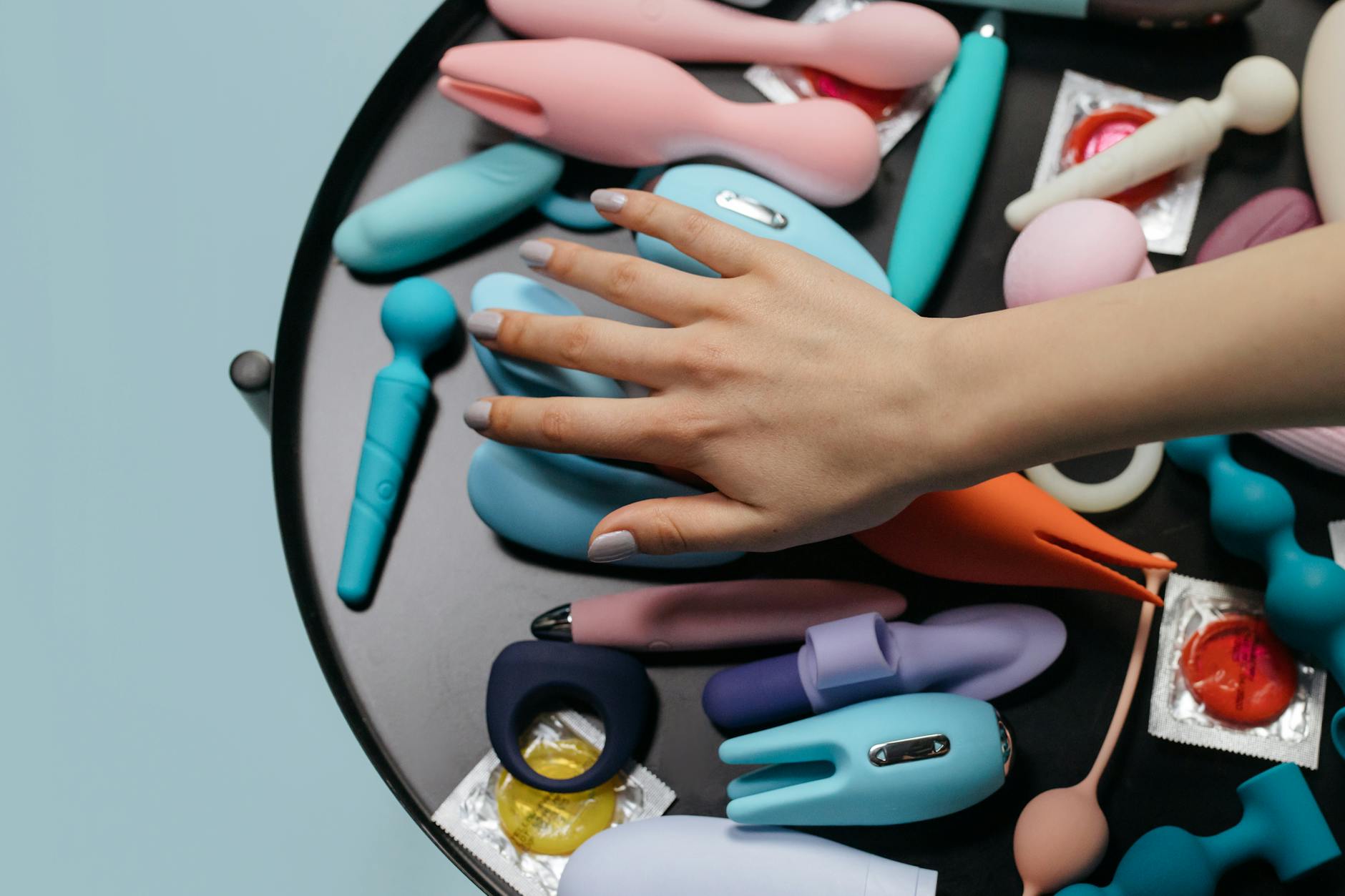
Photo by cottonbro studio on Pexels
Better is not the right question. Different is.
Who typically prefers suction over traditional vibration
From my work with clients navigating pleasure and intimacy, I've noticed some consistent patterns about who gravitates toward suction devices like lemon vibrators.
People with very sensitive clitorises often find traditional vibration overwhelming. When someone says "vibrators feel numb-making" or "I need the intensity so high it almost hurts," they're often dealing with nerve endings that adapt quickly to direct vibration. Suction avoids that problem entirely because the mechanism is different. It doesn't desensitize the tissue the same way.
People who have had difficulty with traditional vibrators during partnered sex often find lemon clitoral vibrators easier to use during intercourse or partnered activity. The shape tends to be more compact. The sensation is less likely to create numbness that makes other types of stimulation feel impossible.
People exploring their pleasure for the first time sometimes find suction less intimidating. It feels less intense, more like a suggestion than a demand. That lower barrier to entry can be genuinely important for building confidence and understanding what your body actually likes.
But plenty of people who love traditional vibration also love suction vibrators. They're not either-or. They're tools for different moments.
Why intensity levels matter differently for suction
One important thing I want to clarify: suction intensity and vibration intensity are not comparable on a linear scale. A gentle lemon sucker is not "like a low-intensity traditional vibrator." They're completely different sensations.
With a traditional vibrator, you can usually dial intensity up or down, and it feels proportionally stronger or weaker. With suction devices, intensity affects both the strength of the pull and the pulsing speed. A higher intensity setting on a lemon clitoral vibrator doesn't just feel like "more," it feels like a different sensation altogether. Some people find they prefer medium settings on a suction device more than higher ones, because the high setting changes the quality of the sensation, not just the quantity.
This is why direct side-by-side comparisons between a lemon vibrator and a traditional vibrator are basically useless. You're not comparing "weak versus strong." You're comparing "pulling sensation" with "buzzing sensation." Your body gets to decide which one works.
What the research actually says
Studies on suction-based clitoral vibrators (often called "air pulse" or "pulsating suction" devices in clinical literature) show that they produce orgasms at comparable rates to traditional vibrators, but with some interesting differences. Users report that suction-based devices tend to produce longer, more varied orgasms. That might be because the sensation doesn't plateau the same way vibration does.
There's also emerging research on suction devices and genital sensitivity. Because suction doesn't involve the same kind of repetitive mechanical friction, some research suggests it may be less likely to contribute to vibration-induced hypoesthesia (that numb feeling some people get from overuse of high-intensity traditional vibrators). But this research is still early, and individual variation is huge.
What matters more than the research is what your specific body tells you. You're the expert on your own pleasure.
How to actually figure out which works for you
If you're curious about trying a lemon vibrator or other suction device for the first time, start with a realistic expectation: it will feel different. Not necessarily better, not necessarily worse. Different.
Give yourself time to adjust. Suction sensations can feel weird initially, especially if you've only ever used traditional vibrators. Your nervous system needs a few minutes to register what's happening. Use it for at least three or four sessions before deciding it's not for you.
Start on a lower intensity setting. You can always increase it. But if you jump straight to high intensity and hate it, you've got incomplete information.
Pay attention to whether you're feeling any numbness afterward. If traditional vibrators leave you feeling numb, and a lemon clitoral vibrator doesn't, that's useful information. It doesn't mean the suction device is "better," but it might mean it's more practical for your body in the long term.
Try it during partnered activity if that's part of your life. One of the biggest advantages of a lemon sucker is that it works differently during intercourse than a traditional vibrator does. That alone might make it worth exploring.
The honest answer about which is "better"
Here's what I tell clients: there's no universally better device. There's only what works better for your body, in this moment, in this context.
Some people use both. They use a lemon vibrator when they want a gentler, more enveloping sensation. They use a traditional vibrator when they want something more direct and intense. Both exist in their pleasure toolkit because both serve different purposes.
If you're currently satisfied with traditional vibration, there's no reason to switch. If traditional vibrators feel numb-making or too intense, a lemon clitoral vibrator might genuinely change your experience. And if you're just starting to explore clitoral vibrators, trying a suction device first might actually set you up for better long-term pleasure than jumping straight to high-intensity vibration.
Your nervous system knows. It will tell you what it prefers. You just have to listen.
People Also Ask
Can you use a lemon vibrator if you've never used a vibrator before?
Absolutely. Some people find that starting with a suction device like a lemon clitoral vibrator is actually easier than starting with traditional vibration. The sensation feels gentler and less intense, which can lower the barrier to trying something new. Start on a lower intensity setting, give yourself time to get used to how it feels, and don't expect instant results. Pleasure is an exploration, not a race.
Do lemon vibrators work on all body types?
Suction devices rely on creating a seal between the toy and your body. This means that for some body types or variations in vulva anatomy, creating and maintaining that seal can be tricky. Some people with flatter vulva anatomy or significant clitoral variation might find that a traditional vibrator works better simply because it doesn't require that seal. Others do beautifully with a lemon sucker. The only way to know is to try, and to have realistic expectations about fit.
Is suction better for sensitive tissue?
For many people, yes. Because suction doesn't rely on direct vibration and friction, it can be gentler on sensitive or easily irritated tissue. That said, if you have actual pain or discomfort during any type of sexual activity, that's a conversation for a healthcare provider. Pleasure tools can help, but they're not a solution to an underlying health issue.
Why do some people say lemon vibrators feel stronger than traditional vibrators?
Because they do, in a way. Even at a lower intensity setting, the sensation of suction can feel more concentrated and more impactful than a lower-intensity traditional vibrator. This is partly because suction engorges the tissue and makes it more sensitive. It's not that the device is physically more powerful, it's that the sensation feels more pronounced because of how your body responds to suction.
Can you use a lemon vibrator with a partner?
Yes. In fact, this is one of the major advantages of suction devices over traditional vibrators. A lemon clitoral vibrator is compact, and the sensation is different enough that it often works well during partnered sex or when one person is using it while another person is involved. Some couples find it's easier to integrate a suction device into partnered activity than a larger wand-style vibrator.
Do lemon vibrators actually last as long as traditional vibrators?
With proper care, yes. A quality lemon sucker should last years if you charge it properly, store it well, and clean it regularly. Like any device, lifespan depends on how it's used and maintained. The technology in suction devices is slightly different from traditional vibrators, but it's not less durable if you treat it with care.
What matters most
Your pleasure is not one-size-fits-all. Neither are the tools designed to support it. Suction vibrators like lemon clitoral vibrators exist because people's bodies respond differently to different types of stimulation. That's not a flaw in traditional vibrators. That's just variation in how humans experience sensation.
The question isn't which is better. It's which one works better for your body, your preferences, and what you're looking for right now. If you're curious about exploring that, you now know what to actually expect and how to set yourself up for success.
Your body will tell you. Trust it.